Do Antimicrobial Additives Affect the Colour, Clarity or Strength of Plastics?

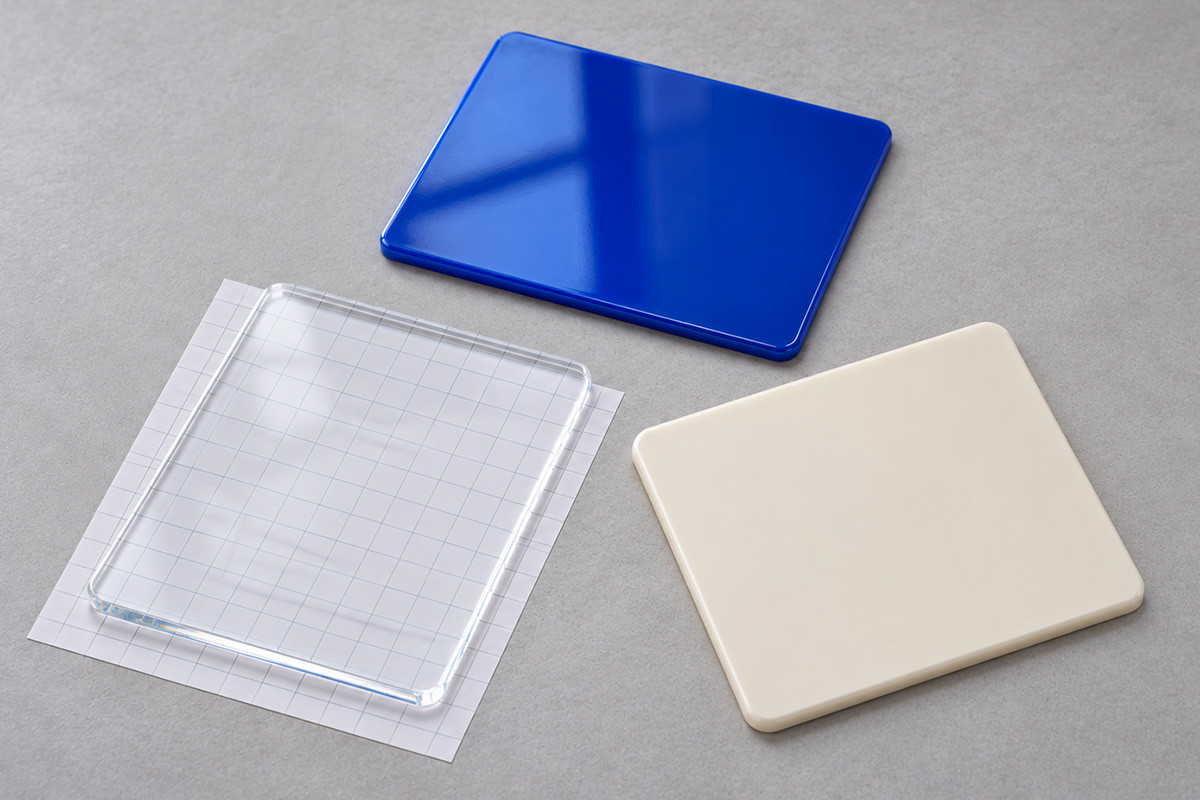
An antimicrobial plastic component still needs to look, feel and perform as its designer intended. A clear cover must meet its optical requirements, a coloured housing must match its approved reference, and a flexible component must retain the behaviour its application requires.
So, do antimicrobial additives affect these properties? There is no universal answer for every formulation. The development objective is to introduce antimicrobial functionality while meeting the product’s existing requirements. Whether that objective has been achieved needs to be established through suitable trials and evaluation.
For manufacturers considering antimicrobial additives for plastics and polymers, appearance and physical performance should therefore be part of the initial specification.
Start with the Product Specification
Before selecting an additive, establish what the finished component must achieve. “The same as our current product” is a useful starting point, but a trial needs more specific acceptance criteria.
Identify the requirements that matter commercially and technically. These might include a colour reference, an approved surface finish, dimensional tolerances, optical performance or a particular mechanical property.
For an existing product, bring together its material datasheet, manufacturing records and relevant test requirements. For a new design, agree which properties need to be demonstrated before the component can progress.
This gives the development team a clear basis for assessing antimicrobial plastics. A sample that demonstrates antibacterial activity still needs to satisfy the other requirements of the intended product.
Assess Colour and Surface Finish
Colour matching should form part of the development brief whenever appearance influences customer acceptance. Supply the agreed colour reference and explain how production parts are normally approved.
Consider the complete visible surface. Is the component glossy, matt or textured? Will it sit alongside an untreated part that must look identical? Does the customer assess the product under particular lighting?
Plan comparisons around these conditions. Use a consistent viewing arrangement and, where the specification requires it, an agreed instrumental measurement method. Set acceptance criteria before reviewing the trial samples.
For example, a manufacturer developing a coloured equipment housing could compare treated and untreated parts against the same approved reference. The comparison should include the intended surface finish and production geometry, rather than relying entirely on a photograph of a flat plaque.
If a difference appears, review the formulation and processing records before attributing it to a single ingredient. Keep the material supplier, colour supplier and antimicrobial additive supplier involved where their input is relevant.
Treat Clarity as a Separate Requirement
Transparent components need their own assessment. A part may appear broadly clear while still failing an optical requirement that matters in use.
Haze and light transmission describe different aspects of optical performance. Haze concerns light scattering, while total luminous transmittance measures how much visible light passes through the material. Appropriate methods should be selected for the material and sample being assessed.
Define the practical requirement first. Must a user read a display through the component, inspect its contents or see an indicator clearly? These questions help explain what acceptable performance means.
Compare samples with representative thickness, geometry and surface finish. A thin plaque should not automatically stand in for a thicker finished cover. Where an instrumental test requires a particular specimen, discuss how those measurements will be complemented by checks on the actual component.
The aim is a clear acceptance decision supported by relevant evidence, rather than a general promise that every transparent formulation will remain unchanged.
Check the Physical Properties That Matter
“Strength” can mean different things depending on how a plastic component is used. Resistance to a pulling force, stiffness and behaviour during impact are separate considerations.
A rigid enclosure, a flexible grip and a snap-fit fastening may need different assessments. Select the properties and test methods around the component’s function and existing specification.
Tensile testing, for example, can measure tensile strength and modulus under defined conditions. Those results should not be treated as a substitute for every other mechanical or finished-product assessment.
Ask the development team which failures the component must withstand and which measurements are used for approval. Depending on the application, the evaluation might include relevant mechanical tests, dimensional checks or functional assembly trials.
Where cleaning, heat or repeated use forms part of the specification, agree whether assessment is required after representative exposure. Avoid assigning a service-life claim to results that only describe newly manufactured samples.
Evaluate the Complete Formulation
Antimicrobial additives for plastics are introduced into a material system that may already contain pigments, fillers, stabilisers and other functional ingredients.
Record the resin grade, additive package and any recycled content when preparing a trial. The question is whether the complete treated formulation meets the product specification.
Keep the recommended addition rate connected to that formulation and manufacturing route. Do not assume that a rate used for another polymer or component is suitable for the current project.
Likewise, treat later changes as review points. A new colour system or material grade should prompt a discussion about whether earlier appearance, physical-property and antimicrobial results remain representative.
Addmaster’s guidance on selecting and trialling a Biomaster formulation explains the information needed to begin that assessment.
Use a Meaningful Sample Comparison
A comparison is most useful when the team understands what differs between the samples. Agree the preparation of treated and untreated material with the relevant technical specialists and testing laboratory.
Use this checklist when planning the evaluation:
- Material identity: Record the polymer grade, supplier, batch and recycled content.
- Formulation: Document pigments, fillers and other additives, including the proposed antimicrobial formulation and addition rate.
- Manufacturing conditions: Record drying, mixing and processing settings relevant to the trial.
- Sample construction: Identify dimensions, thickness, surface finish and any coating, printing or other finishing.
- Conditioning and exposure: Agree storage, conditioning and any cleaning or ageing steps before assessment.
- Acceptance criteria: State the appearance, physical and antimicrobial requirements, with the methods used to assess each.
Label samples so their results can be traced back to these records. If several variables change together, document them clearly; the comparison may not isolate the effect of the antimicrobial addition.
Keep Antibacterial Testing Connected to the Specification
Antibacterial plastics need evidence of antibacterial performance as well as evidence that the component meets its other requirements.
For suitable treated plastics and other non-porous surfaces, ISO 22196 provides a method for assessing antibacterial activity under specified laboratory conditions. It does not measure colour, clarity or mechanical strength.
An acceptable appearance does not establish antibacterial activity, and an antibacterial result does not establish that the component meets its mechanical specification. Both belong in the development review.
Read our guide to ISO 22196 testing on plastics and non-porous surfaces for more on interpreting these results.
Discuss Your Plastic Product with Addmaster
Bring your appearance and performance requirements into the conversation before requesting trial material. Share the polymer grade, manufacturing process, intended application and the criteria the finished component must meet.
If you already have approved samples or a product specification, include them. Explain which decision the next trial needs to support, whether that is matching a colour, assessing a transparent component or retaining a required physical property.
Addmaster can help you assess a Biomaster development route for your application. Explore our antimicrobial plastics guidance, or discuss your material and product requirements with our team.
Biomaster protects the treated material. It does not make a product sterile or replace normal cleaning, disinfection and appropriate handling.
What Next?
🔗 Follow us on Social Media, here is our LINK TREE
✉️ See how our additive technology can benefit your business by CONTACTING US
🦠 Find out more about Biomaster Antimicrobial Technology HERE
🎥 Watch our video on how Biomaster works WATCH NOW
📰 Subscribe to our Newsletter - SUBSCRIBE
← Back to blog