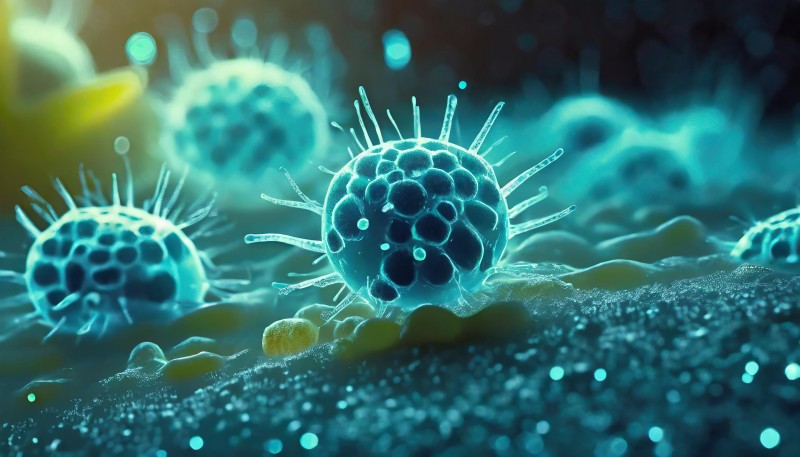

Firefly a realistic microscopic image of bacteria floating 61088.jpg

What is Antimicrobial Technology?

Antimicrobial technology is the science of preventing the growth of harmful microorganisms on the surface of products and materials. By incorporating antimicrobial additives directly into materials during manufacturing, products can benefit from built-in protection that continuously inhibits the growth of bacteria, mould and fungi throughout their usable lifetime.

Today, antimicrobial technology is used in thousands of products around the world, from medical devices and healthcare equipment to consumer products, electronics, packaging, paints, coatings and plastics. It helps manufacturers create products that stay cleaner for longer, are more durable and offer greater confidence in environments where hygiene matters.

Whether you're designing a medical device, manufacturing consumer products or developing advanced materials, understanding how antimicrobial technology works is the first step towards making informed product design decisions.

Understanding The Meaning of Antimicrobial Technology

Dictionary Definition of 'Antimicrobial'

Pronunciation: /ˌæn.ti.maɪˈkroʊ.bi.əl/ (UK) | /ˌæn.taɪ.maɪˈkroʊ.bi.əl/ (US)

Definition: Inhibiting the growth of microorganisms, especially bacteria, fungi, or viruses.

Etymology: Derived from the prefix anti- (against) + microbial (relating to microorganisms). The term originated in the early 20th century as scientific understanding of microbial pathogens advanced.

Antimicrobial technology (specifically) refers to a broad range of advanced solutions designed to inhibit the growth of harmful microorganisms like bacteria, viruses, fungi, and mould. By incorporating antimicrobial additives into products, surfaces, and materials, this technology helps maintain more hygienic environments across various industries, including healthcare, consumer goods, packaging, and textiles. The primary goal is to provide long-lasting antimicrobial product protection, ensuring surfaces and items remain fresher and more hygienic for users. With antimicrobial technology, businesses can enhance their product performance, offering added value and peace of mind to customers seeking high hygiene standards.


The word antimicrobial simply means "against microorganisms."

Microorganisms include bacteria, mould, fungi and certain other microscopic organisms that can grow on the surface of products during normal use.

Antimicrobial technology is specifically designed to inhibit the growth of these microorganisms, helping to protect the product itself from microbial deterioration, staining and odour caused by microbial growth.

It is important to understand that antimicrobial technology is not the same as cleaning or disinfecting. Instead, it provides continuous product protection between routine cleaning cycles by helping reduce microbial growth on treated surfaces.

biomaster_technology_in_action_839933.png

How does Antimicrobial Technology Work?

Modern antimicrobial technology works by incorporating active antimicrobial additives directly into the material during manufacturing.

Unlike sprays or surface coatings that can wear away over time, built-in antimicrobial additives become an integral part of the finished product. Whether incorporated into plastics, coatings, silicones, textiles or other materials, the antimicrobial technology remains evenly distributed throughout the product.

When microorganisms come into contact with the treated surface, the antimicrobial technology begins working immediately.

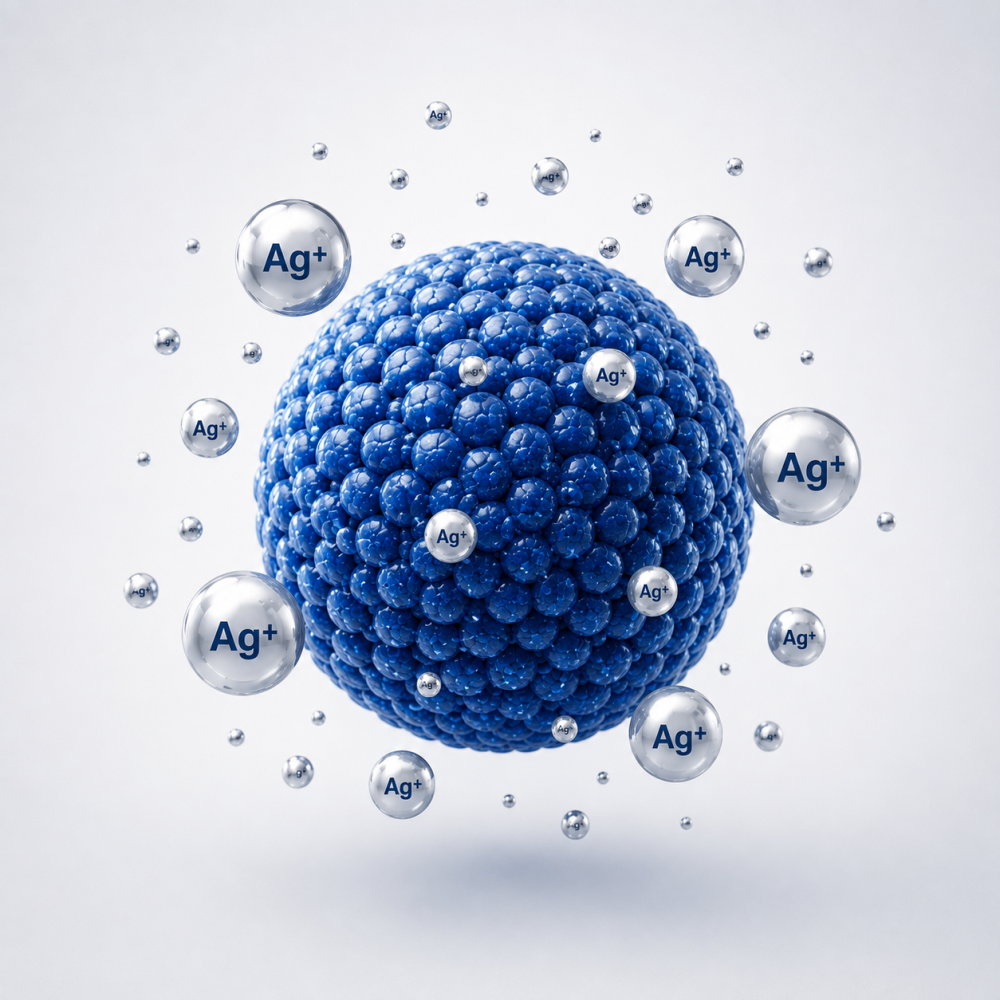
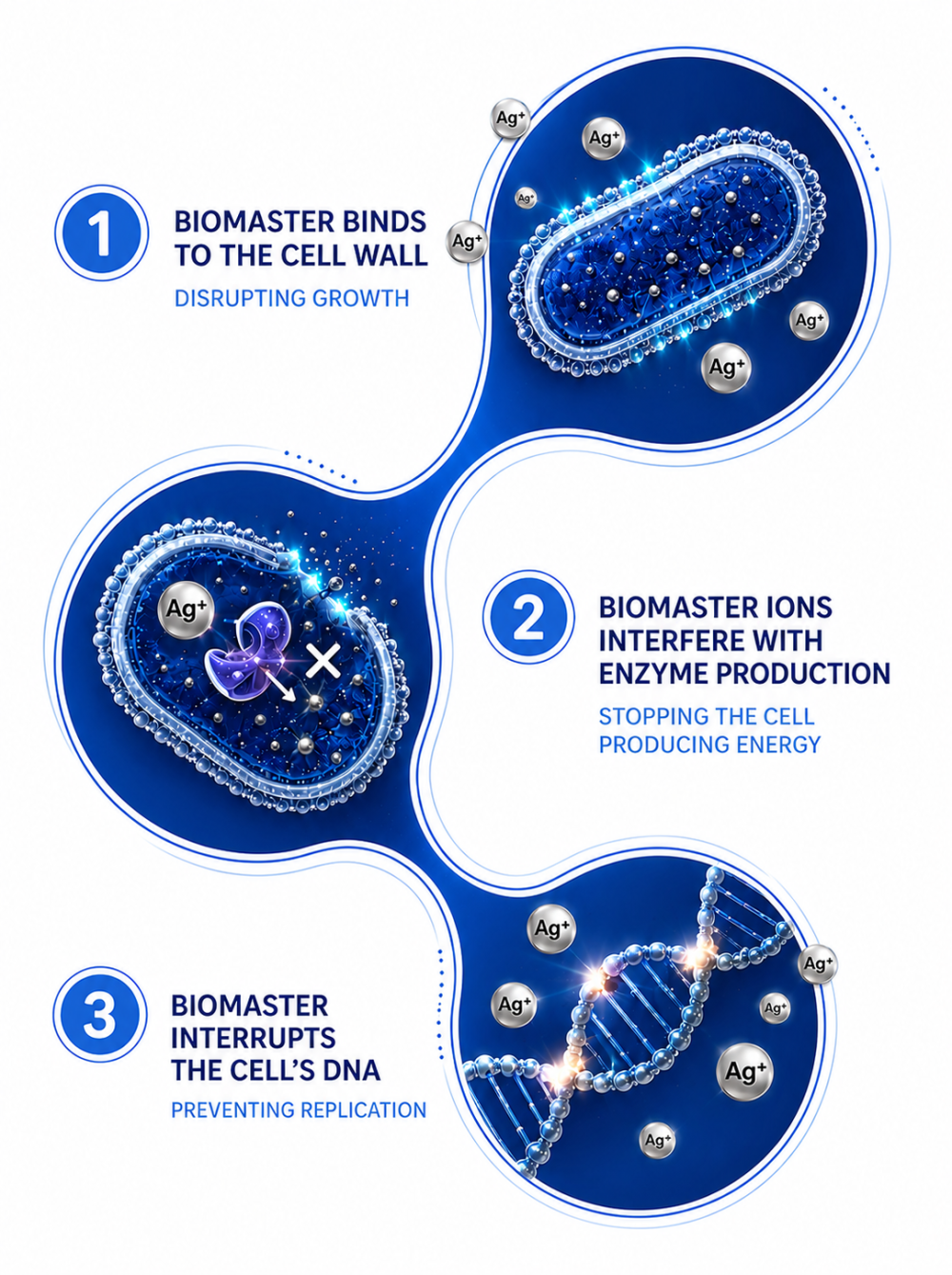
In the case of silver ion technology, silver ions interfere with multiple essential functions within microbial cells. This prevents microorganisms from growing, reproducing and colonising the surface.

Because the technology is built into the material itself, fresh active particles remain available throughout the lifetime of the product, providing continuous antimicrobial product protection.

Antimicrobial_technology_applications_montage_38311756.png

Where Is Antimicrobial Technology Used?

Antimicrobial technology is now incorporated into products across almost every major industry.

Common applications include:

Medical devices / Healthcare equipment / Plastics / Consumer electronics / Kitchenware / Bathroom products / Paints and coatings / Flexible packaging / Building materials / Furniture / Automotive interiors / Textiles / HVAC components / Public transport / Education environments

Wherever products are repeatedly touched or exposed to microbial contamination, antimicrobial technology can provide additional product protection.

What_is_Silver_Ion_Technology_837663432.png

What is Silver Ion Technology?

Silver ion technology is one of the most effective and widely used forms of antimicrobial technology. It harnesses the natural antimicrobial properties of silver to help inhibit the growth of microorganisms on treated products, providing built-in product protection throughout their expected lifetime.

During manufacturing, silver ion additives are incorporated directly into materials such as plastics, coatings, silicones and textiles. Unlike surface treatments, the technology becomes an integral part of the finished product, providing continuous antimicrobial protection that won't simply wear or wash away.

When bacteria and other microorganisms come into contact with a treated surface, silver ions (Ag⁺) interfere with essential cellular processes, including the cell membrane, enzyme activity and DNA replication. This inhibits microbial growth and prevents microorganisms from multiplying on the product's surface.

Today, silver ion technology is used in thousands of products worldwide, from medical devices and healthcare equipment to consumer products, electronics, packaging and building materials. It provides long-lasting antimicrobial product protection and helps keep products cleaner for longer between routine cleaning cycles.

silver_ion_technology_addmaster_844477773333.png

What Are the Benefits of Antimicrobial Technology?

Manufacturers choose antimicrobial technology for many reasons.

Key benefits include:

  • Continuous antimicrobial product protection
  • Built-in performance that lasts for the lifetime of the product
  • Protection against bacterial growth on treated surfaces
  • Reduced staining and material degradation caused by microbes
  • Improved product durability
  • Increased consumer confidence
  • Enhanced product differentiation
  • Compatible with a wide range of manufacturing processes

For many manufacturers, antimicrobial technology also provides a valuable point of difference in increasingly competitive markets.

Addmaster_testing_antimicrobial_83111432.png

How Is Antimicrobial Performance Tested?

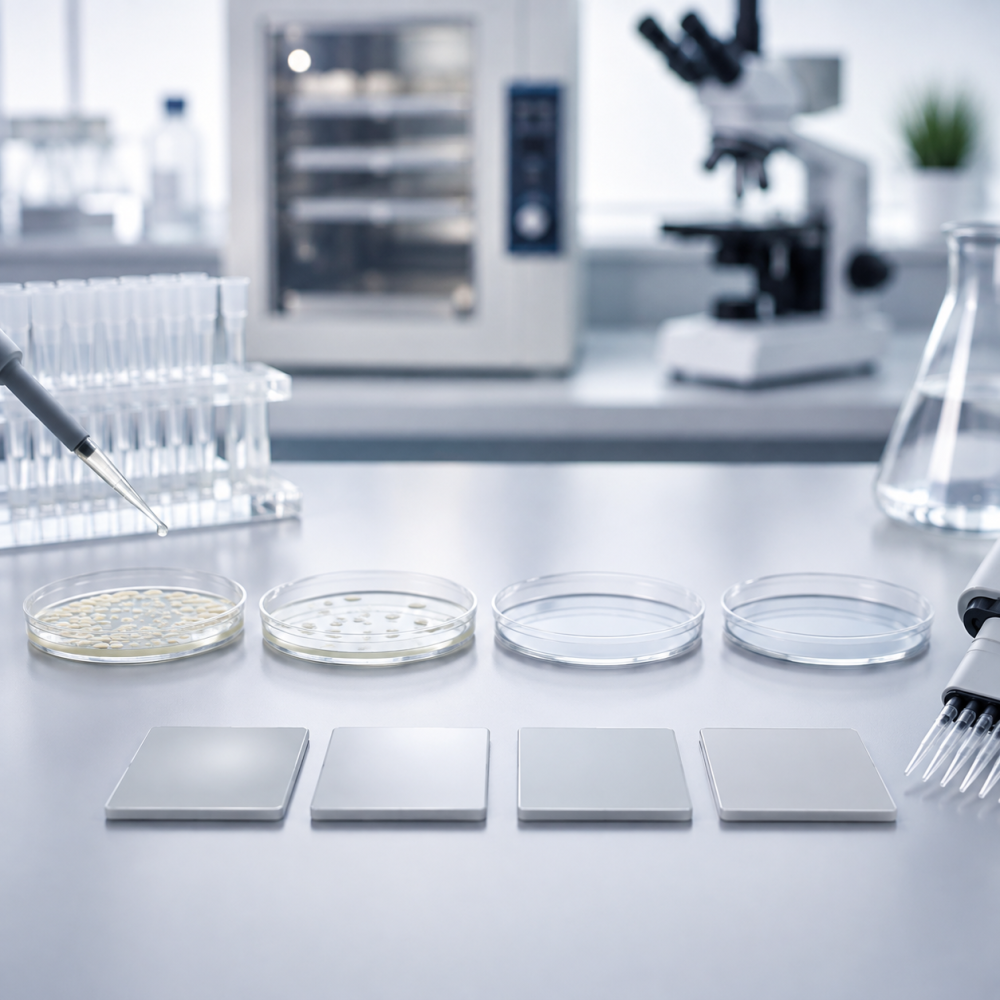
Effective antimicrobial technology should always be independently evaluated using recognised international test methods.

Depending on the application and material, efficacy may be assessed using internationally recognised standards such as:

  • ISO 22196 — Measurement of antibacterial activity on plastics and other non-porous surfaces
  • ISO 20743 — Determination of antibacterial activity on textile products
  • ASTM methods where appropriate
  • JIS standards in specific markets

These laboratory methods allow manufacturers to compare antimicrobial performance under controlled conditions and demonstrate product efficacy using recognised scientific protocols.

Independent testing provides confidence that antimicrobial technologies perform as expected when incorporated into finished products.

Why_choose_biomaster_4946665.png

Why Choose Biomaster Antimicrobial Technology?

Biomaster is Addmaster's market-leading silver ion antimicrobial technology, trusted by manufacturers around the world for more than 25 years.

Available in liquid, powder and masterbatch formulations, Biomaster can be incorporated into a wide range of materials including plastics, coatings, silicones, textiles and more.

Every Biomaster project is supported by Addmaster's technical, regulatory and marketing expertise, helping manufacturers integrate antimicrobial technology efficiently while maintaining product performance and regulatory compliance.

Whether you are developing a new product or enhancing an existing range, Biomaster provides built-in antimicrobial product protection designed to last for the lifetime of the product.

Addmaster_antimicrobial_faq_999995.png

Antimicrobial Technology FAQ

Antimicrobial technology is a material technology that inhibits the growth of microorganisms on treated products and surfaces.

It works by incorporating antimicrobial additives into materials during manufacturing. These additives interfere with essential microbial processes when microorganisms contact the treated surface.

When antimicrobial additives are built into the material, protection is designed to last for the expected lifetime of the product.

Modern antimicrobial technologies are extensively tested and used in a wide variety of commercial and industrial products, subject to applicable regulatory requirements.

Different antimicrobial technologies work in different ways. Biomaster silver ion technology inhibits microbial growth by disrupting essential cellular functions.

Learn More

Educational Articles

At Addmaster, we are committed to providing our customers and partners with in-depth knowledge on antimicrobial technology and its applications. Our comprehensive collection of educational articles covers a wide range of topics, from the science behind silver-based additives to the benefits of antimicrobial protection in various industries. Whether you’re looking to enhance your understanding of how these technologies work or stay updated on the latest innovations, our resources are designed to offer valuable insights and guidance.

  • The Role of Silver in Antimicrobial Additive Technology
    The Role of Silver in Antimicrobial Additive Technology

    Silver has been revered for centuries as a powerful and reliable antimicrobial agent, with ancient civilisations recognising its ability to preserve freshness and prevent microbes. From storing water in silver vessels to applying silver-based treatments for wounds, its natural ability to combat harmful microbes has stood the test of time. Today, silver remains one of the most trusted and effective solutions in helping to control bacteria, viruses, and fungi in a wide range of industries, from healthcare to food packaging.

  • What Does Antimicrobial Mean?
    What Does Antimicrobial Mean?

    Antimicrobial refers to substances or agents that have the ability to kill or inhibit the growth of microorganisms. These microorganisms include bacteria, viruses, fungi, and parasites. The primary goal of antimicrobial substances is to prevent the spread and development of these potentially harmful entities, protecting both human health and various products.

    The National Cancer Institute defines antimicribal as 'A substance that kills microorganisms such as bacteria or mould, or stops them from growing and causing disease'.

  • How Long Does Bacteria Live on a Surface?
    How Long Does Bacteria Live on a Surface?

    Microbes, including bacteria, exhibit remarkable resilience, thriving in environments where other organisms falter. This tenacity extends to inanimate surfaces, such as door handles and tabletops, presenting challenges in hygiene-conscious settings like healthcare and food processing facilities. Let’s delve into the longevity of bacteria on hard surfaces, emphasising the significance of managing microbial persistence to minimise cross-contamination.