New EU Listeria Regulation Changes Are Raising Expectations Across The Food Industry

From July 2026, significant changes to European regulations surrounding Listeria monocytogenes will come into effect, creating new challenges for manufacturers of ready-to-eat (RTE) foods and placing greater emphasis on long-term contamination control throughout the food supply chain.
The changes, introduced under EU Regulation (EU) 2024/2895, amend existing microbiological criteria and require food businesses to demonstrate more robust control of Listeria monocytogenes throughout the entire shelf life of certain ready-to-eat products.
While the food industry has long recognised Listeria as one of the most significant foodborne pathogens, the updated regulations signal a shift in how compliance is assessed, moving beyond the point of manufacture and placing greater responsibility on food businesses to demonstrate continued control after products enter distribution and retail environments.
Why Is Listeria Such A Concern?
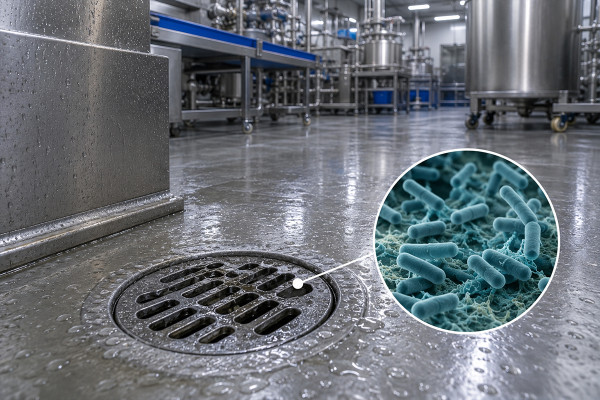
Listeria monocytogenes is particularly challenging because it can survive and grow in conditions that inhibit many other microorganisms, including refrigeration temperatures. Unlike many foodborne bacteria, it can persist within food production environments, colonising drains, equipment, hard-to-clean areas and moisture-prone locations if effective hygiene controls are not maintained.
Although listeriosis is relatively rare, it can cause severe illness in vulnerable individuals, including older adults, pregnant women, newborn babies and those with weakened immune systems. As a result, regulators across Europe continue to strengthen expectations around prevention and control.
What Is Changing?
The key change is that compliance expectations will now extend across the marketed shelf life of many ready-to-eat foods that are capable of supporting the growth of Listeria monocytogenes. Previously, manufacturers often focused on demonstrating compliance while products remained under their immediate control. The revised legislation expands this responsibility and requires stronger evidence that safety criteria remain satisfied until the end of shelf life.
Under the updated rules, manufacturers will generally need to achieve one of two outcomes:
- Demonstrate that Listeria monocytogenes remains absent in 25g throughout shelf life; or
- Provide scientific evidence showing that levels will remain below 100 cfu/g throughout the entire shelf life of the product.
This places increased importance on shelf-life validation, environmental monitoring, predictive microbiology, hygiene management and documented evidence of control.
Which Products Could Be Most Affected?
The regulations are expected to have the greatest impact on ready-to-eat foods that undergo post-cook handling or are exposed to the production environment before packaging.
Examples frequently highlighted by industry experts include:
- Cooked sliced meats
- Smoked fish products
- Soft cheeses
- Prepared salads
- Sandwiches
- Pâté products
- Fresh cream cakes and desserts
These products often involve multiple handling stages and extended refrigerated shelf lives, increasing the importance of contamination prevention throughout production and distribution.
The Growing Importance Of Hygienic Design
As regulations become more demanding, manufacturers are increasingly evaluating every aspect of their production environments, from cleaning procedures and environmental monitoring programmes through to equipment design and material selection.
Hygienic design has become a central consideration in modern food manufacturing. Surfaces, touchpoints, equipment housings, control panels, handles, conveyor components and other frequently contacted areas can all contribute to the overall hygiene strategy of a facility.
While no single technology can replace good manufacturing practices, effective cleaning procedures or robust HACCP programmes, there is growing interest in integrated solutions that support cleaner, more durable production environments.
At Addmaster, we continue to see food manufacturers exploring how built-in antimicrobial product protection technologies can be incorporated into non-food-contact components across processing environments. By helping to protect treated product surfaces from the growth of microorganisms that can contribute to staining, odours and material degradation, these technologies can support broader hygiene-focused product design strategies alongside established cleaning and sanitation protocols.
Preparing For The Future
With the July 2026 implementation date now approaching, food manufacturers supplying the EU and Northern Ireland markets are reviewing their existing processes, validation data and environmental monitoring programmes to ensure they are prepared for the new requirements.
The regulatory changes highlight an increasingly important trend across the food industry: food safety is no longer viewed solely through the lens of testing finished products. Instead, there is a growing focus on demonstrating consistent control across the entire production environment and throughout the full life cycle of the product.
For manufacturers, this means that hygienic design, contamination prevention, environmental control and evidence-based food safety strategies will continue to play an increasingly important role in the years ahead.
To read more please visit https://www.eurofins.co.uk/food-testing/news-and-events/news/eu-listeria-regulation-changes/
For more information on Biomaster Antimicrobial Technology please CLICK HERE
What Next?
🔗 Follow us on Social Media, here is our LINK TREE
✉️ See how our additive technology can benefit your business by CONTACTING US
🦠 Find out more about Biomaster Antimicrobial Technology HERE
🎥 Watch our video on how Biomaster works WATCH NOW
📰 Subscribe to our Newsletter - SUBSCRIBE
← Back to blog