Listeria in Food Processing Environments

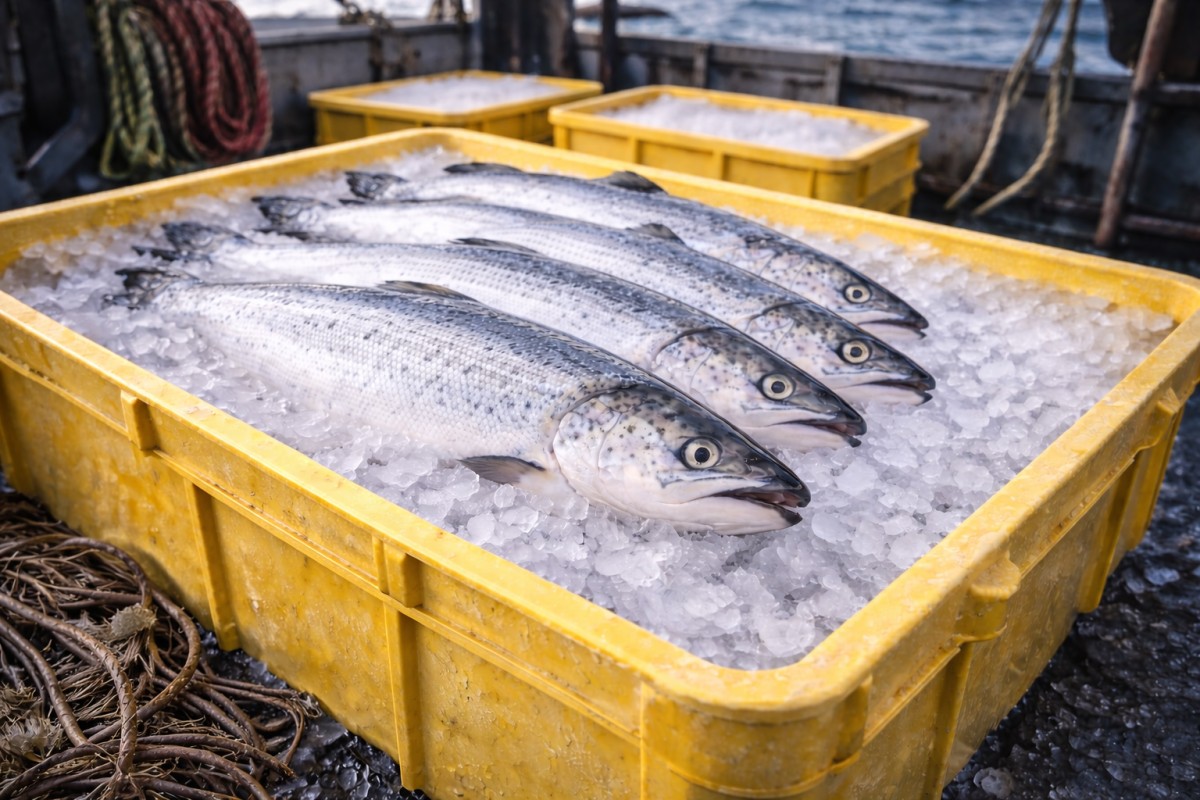
A recent frozen salmon recall in the United States linked to potential Listeria monocytogenes contamination has once again brought industry attention to the behaviour of this well-documented foodborne bacterium.
Recalls of this nature are precautionary in intent, but they also highlight the ongoing complexity of managing microorganisms in chilled and ready-to-eat food environments. Unlike many other bacteria associated with food production, Listeria monocytogenes demonstrates characteristics that make it particularly relevant in facilities where refrigeration, moisture and extended product shelf life are central to operations.
From a manufacturing perspective, the focus is not solely on raw materials or end-product testing. Instead, attention is often directed toward the wider processing environment, including equipment design, drainage systems, polymer components, traffic flow patterns and environmental monitoring programmes.
For food manufacturers operating in chilled, high-care or ready-to-eat sectors, understanding how Listeria monocytogenes behaves within processing environments informs decisions around:
- Hygienic equipment design
- Surface specification and cleanability
- Material durability under repeated sanitation
- Environmental monitoring strategies
- Zoning and workflow structuring
By recognising the environmental persistence and surface interaction characteristics of Listeria, technical teams are better positioned to evaluate how equipment, materials and facility design contribute to overall operational performance.
Understanding Listeria monocytogenes
Listeria monocytogenes is one of the most extensively studied foodborne bacteria due to a combination of microbiological traits that distinguish it from many other organisms encountered in food production environments.
It is classified as a Gram-positive, facultatively anaerobic bacterium and is commonly found in soil, water and decaying vegetation. From an industrial perspective, however, its relevance lies in how it behaves within chilled processing and ready-to-eat food facilities.
Several characteristics contribute to its significance:
- Psychrotrophic growth capability – Unlike many pathogens, L. monocytogenes can survive and multiply at refrigeration temperatures (typically 0–4°C). While growth rates are slower than at ambient temperatures, the ability to remain metabolically active in chilled environments influences shelf-life considerations and environmental management strategies.
- Salt tolerance – The organism can persist in moderately high salt concentrations, making it relevant in processed foods such as cured meats, seafood and brined products.
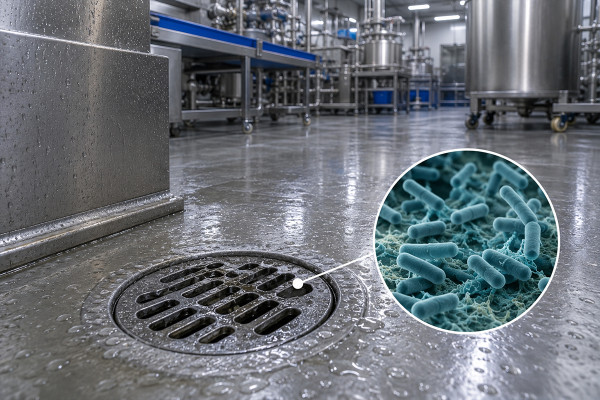
- Biofilm formation – Listeria is capable of forming biofilms on certain materials, including stainless steel and polymer surfaces. Within biofilms, bacterial cells embed within a protective extracellular matrix, which can influence how surfaces respond to routine cleaning and sanitation cycles.
- Environmental persistence – The bacterium has demonstrated the ability to survive in damp niches such as drains, seals, joints, conveyor components and other hard-to-clean areas. In some facilities, strains have been shown to persist over extended periods if environmental conditions allow.
- Wide pH tolerance range – Listeria monocytogenes can survive across a relatively broad pH spectrum compared with many other bacteria, contributing to its adaptability in varied food matrices.
Its ability to remain viable in chilled and moisture-rich environments differentiates it from many other bacteria encountered in food processing. As a result, facility design, equipment selection and material specification in chilled and ready-to-eat sectors often account for these microbiological characteristics.
For QA and technical teams, a detailed understanding of how Listeria monocytogenes interacts with surfaces, moisture and temperature supports informed decisions around environmental monitoring, hygienic design and material performance considerations.
For a detailed scientific overview of the bacterium’s background and microbiology, see our in-depth article here: Listeria Explained
Environmental Monitoring and Material Selection
Modern food manufacturing facilities operate within structured hygiene management frameworks designed to monitor, verify and maintain environmental conditions.
In chilled and ready-to-eat production environments in particular, this often includes:
- Structured environmental monitoring programmes (EMP), typically incorporating routine swabbing across defined risk zone
- Hygienic equipment design principles aligned with cleanability and drainage best practice
- Defined cleaning and sanitation schedules with validation procedures
- Controlled workflow, zoning and personnel movement strategies
- Careful specification of surfaces and materials used in both direct and indirect contact areas
Environmental monitoring programmes frequently differentiate between zones, from food-contact surfaces to adjacent and non-product contact areas. This zoning structure helps technical teams evaluate environmental trends and identify areas requiring procedural review.
However, monitoring is only one part of the equation. Equipment design and material selection influence how effectively surfaces respond to routine cleaning and sanitation.
Surface Design Considerations in Processing Environments
From an engineering and technical perspective, material selection often considers:
- Surface finish and smoothness
- Resistance to repeated chemical exposure
- Moisture absorption characteristics
- Structural integrity under thermal cycling
- Compatibility with cleaning agents
- Joint and seal design
- Elimination of dead zones or liquid retention points
Moisture-prone areas, including drains, conveyor undersides, hinges, seals, push points and control panels, are often examined closely during hygienic design reviews. Polymer components used in housings, handles, bins and guards must also withstand repeated sanitation cycles without degradation that could compromise cleanability.
The long-term durability of materials under operational conditions is particularly relevant in chilled environments where condensation and washdown procedures are routine.
The Interface Between Material Performance and Hygiene Protocols
While cleaning and sanitation protocols remain central to environmental management, the performance characteristics of the materials themselves can influence maintenance cycles and long-term condition.
For QA managers and technical directors, evaluating surface materials may include questions such as:
- How does the material respond to repeated chemical sanitation?
- Does surface wear increase roughness over time?
- Are there micro-crevices forming through fatigue or mechanical stress?
- Does the design minimise moisture retention?
In this context, material specification becomes an engineering decision rather than a purely aesthetic one.
By integrating hygienic design principles with thoughtful material selection, manufacturers can align equipment performance with operational hygiene frameworks.
Surface Technologies in Food Production Environments
In certain applications within food processing facilities, antimicrobial additive technologies are incorporated into polymer materials during the manufacturing stage.
These additives are typically dispersed throughout the plastic matrix — for example within injection moulded, extruded or thermoformed components — so that the antimicrobial functionality becomes an integral part of the finished product rather than a surface coating applied post-production.
When properly formulated and specified, such technologies are designed to inhibit the growth of bacteria on the treated surface itself. They do not replace cleaning or sanitation procedures, and they do not alter established food safety systems. Instead, they are considered within the broader context of material performance, durability and long-term surface condition.
Why Polymer Components Are Considered
Polymer materials are widely used throughout food production environments due to their:
- Chemical resistance
- Mechanical durability
- Lightweight properties
- Corrosion resistance
- Design flexibility
However, plastic components are frequently located in high-touch or moisture-prone areas, including control panels, handles, housings, guards and bins. In these locations, surface wear, condensation exposure and repeated sanitation cycles can influence long-term surface condition.
Incorporating antimicrobial additives at the compounding stage can be one consideration when specifying materials for such components, particularly where maintaining surface integrity under operational conditions is important.
Typical Applications in Food Processing Facilities
Antimicrobial-enhanced polymers may be used in:
- Equipment housings and external casings
- Push points, handles and control interfaces
- Polymer conveyor guides and modular components
- Storage bins, trays and transport containers
- Wall protection panels and kick plates
- Certain non-food-contact packaging elements
- Trolley components and utility carts
In each case, the additive is designed to inhibit bacterial growth on the treated surface itself, supporting surface condition between scheduled cleaning cycles.
Designing for Performance and Durability
For QA managers, technical directors and equipment engineers, material specification in food processing environments extends well beyond initial functionality. Long-term performance under operational conditions is often a central consideration, particularly in chilled and high-moisture facilities.
Evaluating equipment and material performance commonly includes assessing:
- Cleanability and surface finish – Surface roughness (Ra values), porosity and texture can influence how easily residues are removed during cleaning cycles. Smooth, non-porous finishes are often preferred to minimise accumulation in micro-crevices.
- Resistance to repeated chemical sanitation – Processing environments frequently involve exposure to alkaline detergents, chlorine-based sanitisers, quaternary ammonium compounds or peracetic acid formulations. Materials must retain structural integrity and surface condition after repeated exposure.
- Moisture ingress resistance – Condensation, washdown procedures and temperature differentials can challenge seals, joints and polymer components. Material stability in damp conditions is essential for maintaining dimensional performance.
- Mechanical durability – Impact resistance, fatigue performance and abrasion resistance influence how components perform under repeated use, particularly in high-touch or load-bearing applications.
- Thermal stability – Materials may experience thermal cycling between chilled processing zones and ambient maintenance environments. Dimensional stability under these variations can be important.
- Long-term material stability – UV exposure (where relevant), stress cracking, plasticiser migration and surface degradation over time are additional considerations during lifecycle evaluation.
From an engineering perspective, materials are often selected based on how they perform after thousands of cleaning cycles rather than how they appear at installation.
Integrating Antimicrobial Additives at the Design Stage
Incorporating antimicrobial additives during polymer compounding or masterbatch integration can be one consideration within overall product design, particularly for high-touch polymer components such as handles, housings, guards and interface points.
Because the additive is typically integrated throughout the polymer matrix rather than applied as a surface coating, it forms part of the material structure itself. This can provide consistent surface activity over the service life of the component, subject to appropriate specification and processing conditions.
Importantly, antimicrobial integration is evaluated alongside:
- Mechanical performance of the base polymer
- Processing temperatures during moulding or extrusion
- Colour and aesthetic requirements
- Regulatory alignment
- Compatibility with cleaning regimes
For QA and technical teams, the decision to incorporate antimicrobial technology is typically part of a broader discussion around material performance, durability and lifecycle optimisation, not a standalone hygiene solution.
By considering surface finish, chemical resistance, mechanical integrity and additive integration together at the design stage, manufacturers can align equipment performance with operational demands in food production environments.
Ongoing Industry Attention
Food recalls attract public visibility, but within the industry they also reinforce the importance of continuous monitoring, verification and system review within manufacturing environments.
Environmental control in chilled and ready-to-eat facilities is not static. Processes, equipment layouts, material condition and workflow patterns evolve over time. As a result, many food manufacturers adopt structured review cycles that assess:
- Environmental monitoring data trends
- Equipment performance under sanitation regimes
- Surface condition and wear patterns
- Changes in product formats or packaging
- Facility modifications or line extensions
Understanding the microbiological characteristics of organisms such as Listeria monocytogenes supports informed decision-making across these areas. Knowledge of how the bacterium interacts with temperature, moisture and surface materials helps technical teams evaluate facility design and equipment specification with greater precision.
In practice, this often means that microbiological insight informs engineering choices, from hygienic design refinements to the selection of polymer components used in high-contact or moisture-prone areas.
Aligning Material Strategy with Operational Demands
As food production environments continue to modernise, there is increasing interest in how materials perform over extended service life. Durability under repeated sanitation, resistance to environmental stress and long-term surface integrity are now part of many equipment specification discussions.
Where appropriate, antimicrobial additive technologies may be considered as part of polymer material design, integrated during manufacture and evaluated alongside mechanical and regulatory requirements.
Such technologies are designed to inhibit bacterial growth on the treated surface itself and are specified within the context of broader material performance considerations. They form part of engineering discussions rather than replacing established hygiene frameworks.
If you are reviewing equipment design, polymer component selection or material performance within food production environments, our technical team can provide application-specific guidance aligned with processing conditions and regulatory considerations.
For further information or to discuss your application, contact our technical specialists.
What Next?
🔗 Follow us on Social Media, here is our LINK TREE
✉️ See how our additive technology can benefit your business by CONTACTING US
🦠 Find out more about Biomaster Antimicrobial Technology HERE
🎥 Watch our video on how Biomaster works WATCH NOW
📰 Subscribe to our Newsletter - SUBSCRIBE
← Back to blog