Designing Hygiene into Flexible Films
Flexible films are among the most widely used material formats in modern manufacturing. Found across packaging, healthcare, logistics, consumer goods and industrial applications, they are relied upon for protection, containment, efficiency and cost-effectiveness. Yet despite their ubiquity, flexible films are often judged almost entirely on barrier performance, thickness, sealability and cost, with surface hygiene rarely treated as a core design parameter.
As flexible film applications evolve, this approach is increasingly being challenged. Films are becoming thinner, lighter, reused more often and exposed to more complex environments. At the same time, expectations around cleanliness, durability and product confidence are rising. In this context, antimicrobial technology is emerging as a logical material enhancement rather than an optional add-on.
The changing role of flexible films
Historically, many flexible films were designed for short, linear lifecycles. A film was manufactured, filled, transported, used and discarded, often within a relatively controlled timeframe. Hygiene concerns were largely managed through disposal and replacement. Today, that model no longer applies across many sectors.
Flexible films are now routinely used in applications involving extended storage, repeated handling, refill systems, reuse, and exposure to fluctuating temperature and humidity. Films may pass through multiple touchpoints, environments and users before reaching end of life.
As a result, performance expectations have expanded beyond basic containment. Manufacturers are increasingly expected to consider how flexible films behave in real-world conditions, not just how they perform in laboratory testing.

Where flexible films are vulnerable
From a material science perspective, flexible films present several characteristics that can make them susceptible to microbial build-up.
Many films operate in environments where moisture is present, either through condensation, contents, cleaning processes or ambient humidity. Moisture alone does not cause microbial growth, but when combined with warmth and organic residues, it creates favourable conditions for microbes to multiply on surfaces.
Repeated handling introduces another variable. Human contact can transfer microbes onto film surfaces during filling, packing, transport and use. In high-throughput or consumer-facing applications, this contact is frequent and difficult to control.
Over time, microbial build-up can contribute to secondary effects that directly impact film performance and perception. These can include surface staining, odour development, discolouration and, in some cases, gradual material degradation. While these issues may not compromise barrier function immediately, they can undermine perceived quality, confidence and brand trust.
Why hygiene is becoming a design issue
For many years, hygiene management for flexible films has been treated as an operational or behavioural issue rather than a material design challenge. Cleaning regimes, replacement cycles and disposal have been used to manage contamination risk.
However, this approach is becoming less effective as films are used for longer, reused more frequently and incorporated into systems where cleaning is inconsistent or impractical. In addition, frequent replacement runs counter to sustainability goals. If a film performs mechanically but is discarded early due to odour, staining or hygiene concerns, material efficiency is compromised. This has led manufacturers to reassess how much responsibility can realistically be placed on end users, and how much can be addressed at the material level.
Antimicrobial technology offers a way to support hygiene passively and continuously, without requiring changes to handling, cleaning behaviour or product design.

How antimicrobial technology integrates into flexible films
Unlike surface treatments or coatings, antimicrobial additive technology are incorporated directly into the polymer matrix during film manufacture. This means the antimicrobial functionality becomes an intrinsic part of the material rather than a layer applied after production. Once integrated, the antimicrobial technology remains present throughout the life of the film. It does not rely on migration to the surface in a way that compromises durability, nor does it alter the visual or tactile properties of the film.
From a manufacturing perspective, antimicrobial additives are designed to be compatible with common flexible film polymers and standard processing techniques. When correctly specified, they do not require changes to extrusion, blowing or converting processes. In practical terms, antimicrobial technology works by inhibiting the growth of microbes on the surface of the film. It does not sterilise the surface and it does not replace cleaning, but it helps reduce microbial proliferation between cleaning cycles and during normal use.
The performance benefits antimicrobial technology delivers
When antimicrobial technology is designed into flexible films, the value it delivers extends beyond hygiene alone. One of the most immediate benefits is the inhibition of microbial growth on the film surface. This helps maintain a cleaner surface condition in environments where films are exposed to moisture, organic residues or frequent handling.
By limiting microbial activity, antimicrobial technology can also help reduce odour formation. Odours are often the result of microbial metabolism rather than the material itself, and once present, they can be difficult to remove.
Staining and discolouration are another concern. Microbial growth can contribute to visible surface changes that affect appearance and perceived cleanliness. For consumer-facing or brand-critical packaging, this can be particularly damaging.
There is also a material protection aspect. Certain microbes can contribute to long-term material degradation, particularly in warm, humid environments. By inhibiting microbial growth, antimicrobial technology can help support more consistent material performance over time.
Finally, there is an element of confidence. In many applications, particularly healthcare-adjacent, logistics or reusable consumer products, antimicrobial product protection can provide reassurance that hygiene has been considered at the design stage, not left entirely to downstream control measures.
Applications where antimicrobial flexible films add most value
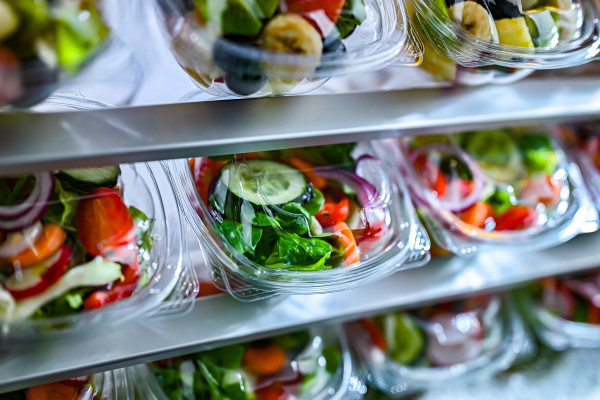
Not every flexible film application requires antimicrobial product protection. However, there are clear use cases where the benefits are particularly relevant. These include outer layers of food and ingredient packaging where frequent handling occurs, but where direct food contact is not involved. They also include healthcare and pharmaceutical packaging materials used in controlled but high-touch environments.
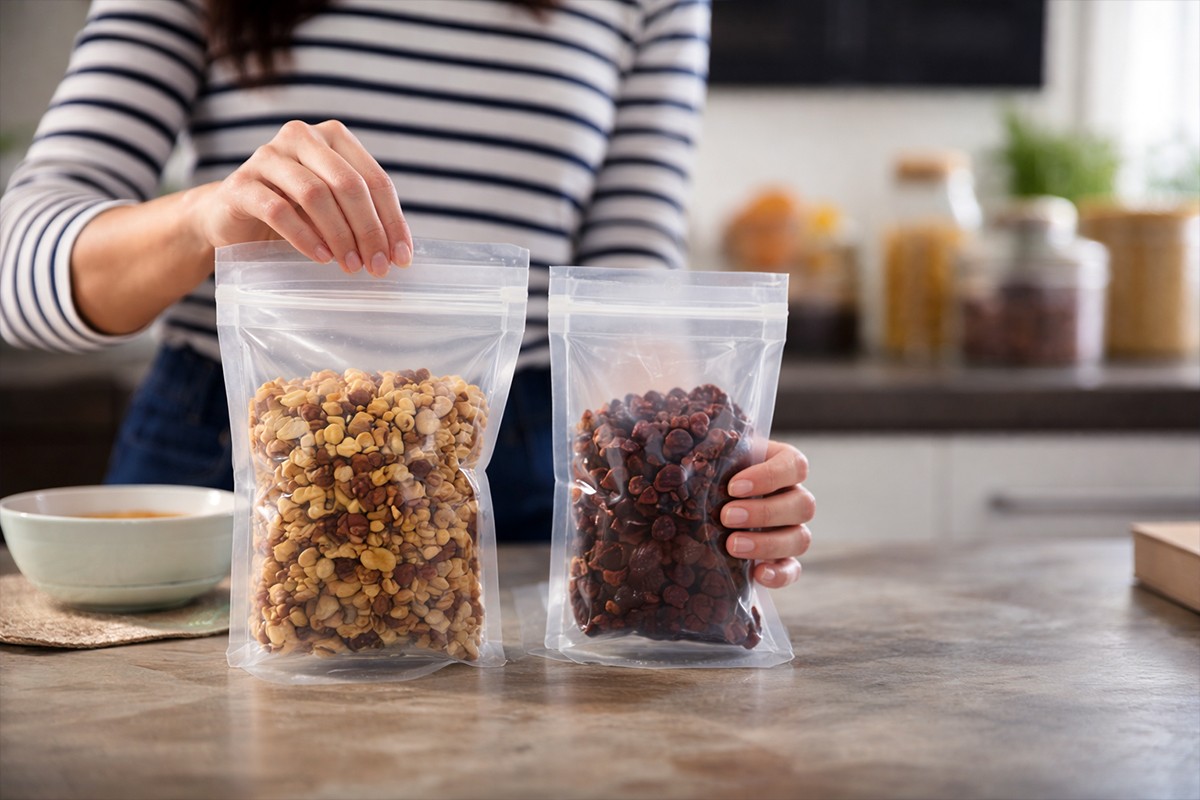
Reusable flexible packaging systems, such as refill pouches or durable bags, are another strong fit. As reuse increases, so does the importance of maintaining hygiene and appearance between uses. Waste, laundry and logistics films are also exposed to challenging conditions, including moisture, organic matter and variable temperatures. In these environments, antimicrobial technology can help support durability and odour control.
Antimicrobial technology and sustainability
There is often a misconception that added functionality conflicts with sustainability objectives. In reality, the opposite can be true when antimicrobial technology is specified responsibly. By supporting longer service life, improved reuse potential and reduced premature disposal, antimicrobial flexible films can contribute to material efficiency and waste reduction. When films remain functional and acceptable for longer, fewer resources are required to replace them.
Importantly, antimicrobial technology does not encourage reduced cleaning or poor hygiene practices. Instead, it complements existing protocols by supporting hygiene between interventions.
As with all additives, appropriate selection, testing and regulatory consideration are essential. Antimicrobial technology should be used where it delivers clear functional benefit and aligns with the intended application.
Designing flexible films for real-world performance
Flexible films are no longer simple barrier materials. They are engineered components expected to perform consistently across complex environments, extended lifecycles and evolving user expectations.
As manufacturers look to add value without increasing complexity, antimicrobial technology represents a logical, low-impact enhancement. By addressing hygiene at the material design stage, rather than treating it solely as a downstream issue, flexible films can be better equipped for modern use.
In applications where hygiene, durability and confidence matter, antimicrobial technology is increasingly becoming part of what defines a well-designed flexible film.
What Next?
🔗 Follow us on Social Media, here is our LINK TREE
✉️ See how our additive technology can benefit your business by CONTACTING US
🦠 Find out more about Biomaster Antimicrobial Technology HERE
🎥 Watch our video on how Biomaster works WATCH NOW
📰 Subscribe to our Newsletter - SUBSCRIBE
← Back to blog