The RBR Active and Biomaster Partnership

Medical devices must perform in the real world
A successful medical device has to do more than perform its primary function. It must also work for the people who use it, fit naturally into its intended environment and retain its performance throughout its expected life. Material selection, durability, portability, maintenance and cleanability can all influence whether a well-conceived product succeeds outside the development environment.
Product-surface hygiene is therefore becoming an increasingly relevant design consideration. Medical and healthcare products may be handled repeatedly, used for extended periods, transported between locations or shared between users. Routine cleaning remains essential, but manufacturers can also consider how the product itself is engineered and whether antimicrobial product protection can be incorporated during manufacture.
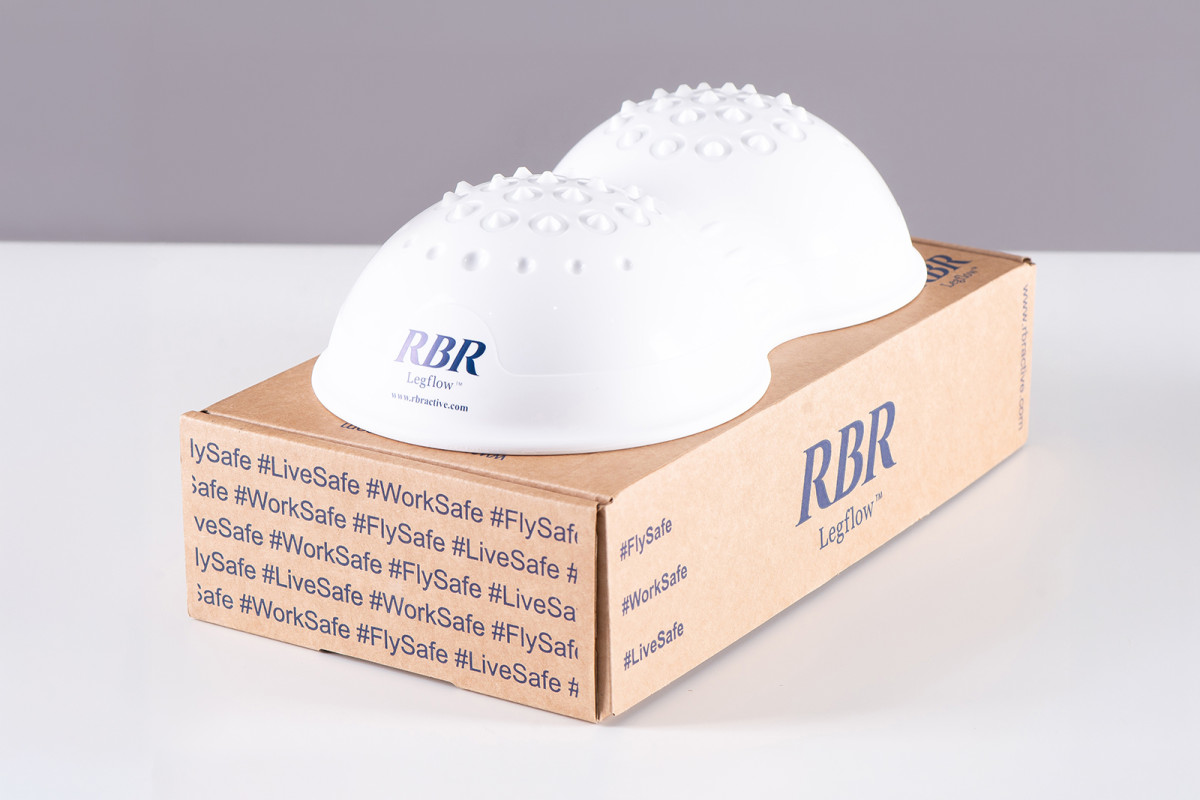
The RBR legflow provides a practical example. Developed to support movement of the feet and lower legs during periods of sitting, the device combines a distinctive physical design with clinically researched performance and built-in Biomaster antimicrobial technology. Its development demonstrates how functional and material considerations can be brought together rather than treated as unrelated requirements.
The challenge of prolonged sitting
Periods of restricted movement are common across modern life. People sit at desks, travel for long periods, spend time gaming, recover in healthcare environments or experience reduced mobility at home and in care settings. The RBR legflow was developed in response to the importance of encouraging lower-limb movement during sedentary periods.
The compact device sits on the floor beneath the user’s feet. It incorporates two rounded domes with patented nodules, allowing users to carry out three simple foot exercises while seated. RBR reports that its research measured an 11-fold increase in popliteal venous blood-flow velocity during use, from 4.6 cm/s to 63.3 cm/s in adults seated in office chairs. These figures and the associated medical-performance claims belong to RBR and should be considered alongside its published clinical information and instructions for use.
The product has potential relevance across several settings, including workplaces, travel, healthcare, care homes, gaming and the home. This range creates a demanding design brief. A device intended for different environments needs to be portable and straightforward to use, while also being robust enough for repeated contact, movement, transport and storage.
A personal experience behind the product
RBR legflow also has a powerful human story. Its creator, Paul Westerman, survived a massive pulmonary embolism in 2011 after developing a deep vein thrombosis following a minor injury and a period of immobilisation. RBR explains that his subsequent recovery and first-hand understanding of thrombosis helped motivate the development of the device and his wider work to raise awareness.
That experience gave the project a clear purpose: to develop a simple device that encourages active foot movement when someone is seated. RBR went on to work with clinical specialists, including researchers associated with the Medical Research Institute of New Zealand, to investigate the concept. The company describes the resulting work as peer-reviewed research and clinical trials that informed the development of legflow.
For Addmaster, the partnership is significant because it shows how material technology can support a product whose design is grounded in a clear user need. Biomaster does not deliver the device’s medical function; that comes from the physical design, the exercises and RBR’s research. Its role is different and deliberately specific: to protect the treated product surface against microbial growth.
Why product-surface hygiene deserves consideration
A floor-based device designed for regular foot contact encounters conditions that product developers should consider carefully. It may be used while someone is wearing shoes, socks or bare feet. It may be kept under a desk, placed in luggage, stored in a cupboard or moved between different rooms and buildings. Depending on the setting, more than one person may use the same device.
These realities do not remove the need for appropriate cleaning. Antimicrobial technology should never be presented as a replacement for routine cleaning, disinfection where required, or good hygiene practice. However, they do help explain why RBR chose to consider antimicrobial product protection as part of the material specification.
Microorganisms deposited on an untreated surface may remain there between cleaning cycles. By incorporating an appropriate antimicrobial additive into the product material, manufacturers can create an additional, built-in feature that works continuously on the treated surface. This approach is especially relevant where a temporary coating would be undesirable or where the product is expected to remain in service for a long period.
How Biomaster is incorporated
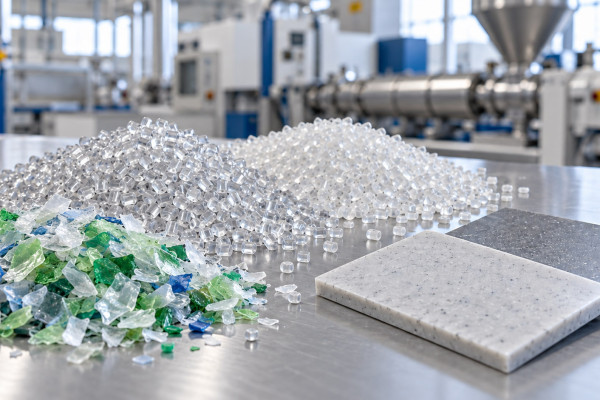
Biomaster is Addmaster’s silver-ion antimicrobial technology. It can be supplied in a form suitable for incorporation into polymers and other materials during manufacture. For a moulded product such as RBR legflow, this means antimicrobial product protection can become an integral part of the product rather than something applied only after production.
When microorganisms encounter a Biomaster-treated surface, silver ions interfere with essential cellular processes. They act at multiple sites within susceptible microbial cells, helping to inhibit their growth. Because the technology is distributed through the treated material, the antimicrobial function is designed to remain present for the product’s effective lifetime, subject to the specified formulation, application and verification.
Successful integration depends on more than selecting an additive. Material compatibility, manufacturing conditions, colour, target organisms, intended markets, addition rate and regulatory requirements all need to be considered. Addmaster works with manufacturers through these decisions and can support formulation, testing and claims development. The objective is to achieve verified antimicrobial performance without compromising the qualities that make the underlying product useful.
Designed-in product protection
The RBR partnership reflects a broader principle, hygiene-related performance is most effective when considered early in product development. If it is introduced only after the shape, material and manufacturing process have been fixed, the available choices may be narrower, more expensive or harder to validate.
Early consideration allows the antimicrobial system to be matched to the polymer and process. It also creates time for prototypes or production samples to be tested, for relevant regulatory requirements to be reviewed and for the eventual marketing claims to be aligned with the evidence. Product, technical, regulatory and marketing teams can then work from the same performance definition.
This is particularly important in medical and healthcare markets, where an ambiguous claim can create unnecessary risk. Statements about the medical purpose of RBR legflow must be supported and owned by the device manufacturer. Statements about Biomaster should remain focused on antimicrobial performance on the treated surface. Clear separation protects both organisations and helps customers understand exactly what each element of the product does.
Supporting different use environments
RBR presents legflow for a broad range of sedentary situations. In a workplace, the device can sit beneath a desk and provide a physical prompt for movement. For travel, portability and the absence of batteries or software are useful design characteristics. In gaming and home environments, the device can be used without interrupting the seated activity. Healthcare and care settings introduce additional considerations around durability, maintenance and the possibility of multiple users.
The antimicrobial component does not change with the setting. Its role remains the inhibition of microbial growth on the treated product surface. That consistency is valuable for products expected to move between environments because the product protection is incorporated into the material and does not depend on a user remembering to reapply a treatment.
Nevertheless, context matters. Cleaning protocols, use instructions and any infection-prevention requirements should always be determined by the responsible organisation. Biomaster provides product protection and supports the overall hygiene design of the device; it does not make the device sterile, protect users from disease or replace established hygiene procedures.
A practical model for medical-device developers
The value of the RBR legflow story extends beyond a single product. It gives medical-device and healthcare-product developers a practical model for thinking about materials. Rather than asking only whether a polymer can be moulded into the required shape, teams can consider a wider set of questions. How will the product be handled? Where will it be stored? Could it be shared? How frequently will it be cleaned? What level of durability is required? Can additional functionality be incorporated without changing the user experience?
These questions are best explored while the product remains in development. Addmaster can work with polymer suppliers, moulders, designers and brand owners to identify a suitable Biomaster grade, establish an appropriate addition rate and arrange antimicrobial testing. Regulatory and marketing support can then help ensure that the language used at launch accurately reflects the verified performance.
This development-stage collaboration is an important part of the proposition. An antimicrobial additive is not simply a generic ingredient placed into any material at any concentration. It is part of a defined product system whose performance should be assessed in the final substrate and communicated responsibly.
Bringing purpose, performance and material science together
RBR legflow began with a personal experience and a determination to address the consequences of prolonged immobility. Its development brought together product design, clinical expertise and research. The integration of Biomaster added another carefully defined layer, built-in antimicrobial product protection for the treated product surface.
The result illustrates what can happen when hygiene is treated as a design consideration rather than an afterthought. RBR did not rely on users applying a separate antimicrobial treatment to the finished device. The technology was incorporated into the material, enabling it to remain part of the product throughout its effective lifetime while routine cleaning practices continue.
For manufacturers developing the next generation of medical and healthcare products, the lesson is straightforward. Consider how the product will be used in the real world, bring material specialists into the conversation early and define every performance claim clearly. With the right formulation, testing and support, antimicrobial technology can become a purposeful part of the product’s design.
To discuss integrating Biomaster antimicrobial technology into a medical or healthcare product, contact Addmaster during the development process.
Discover More
For more than 25 years, Addmaster has worked with manufacturers across the healthcare sector to integrate Biomaster antimicrobial technology into polymer-based products. Whether developing a new medical device or enhancing an existing product, our team provides technical expertise, regulatory guidance and materials support throughout the development process.
If you would like to learn more about Biomaster antimicrobial technology and how it can support your next healthcare product, contact the Addmaster team or find out more about Biomaster antimicrobial technology.
To learn more about the RBR legflow™ product visit https://www.rbrlegflow.com
What Next?
🔗 Follow us on Social Media, here is our LINK TREE
✉️ See how our additive technology can benefit your business by CONTACTING US
🦠 Find out more about Biomaster Antimicrobial Technology HERE
🎥 Watch our video on how Biomaster works WATCH NOW
📰 Subscribe to our Newsletter - SUBSCRIBE
← Back to blog