Choosing an Antimicrobial Masterbatch for your Polymer Process

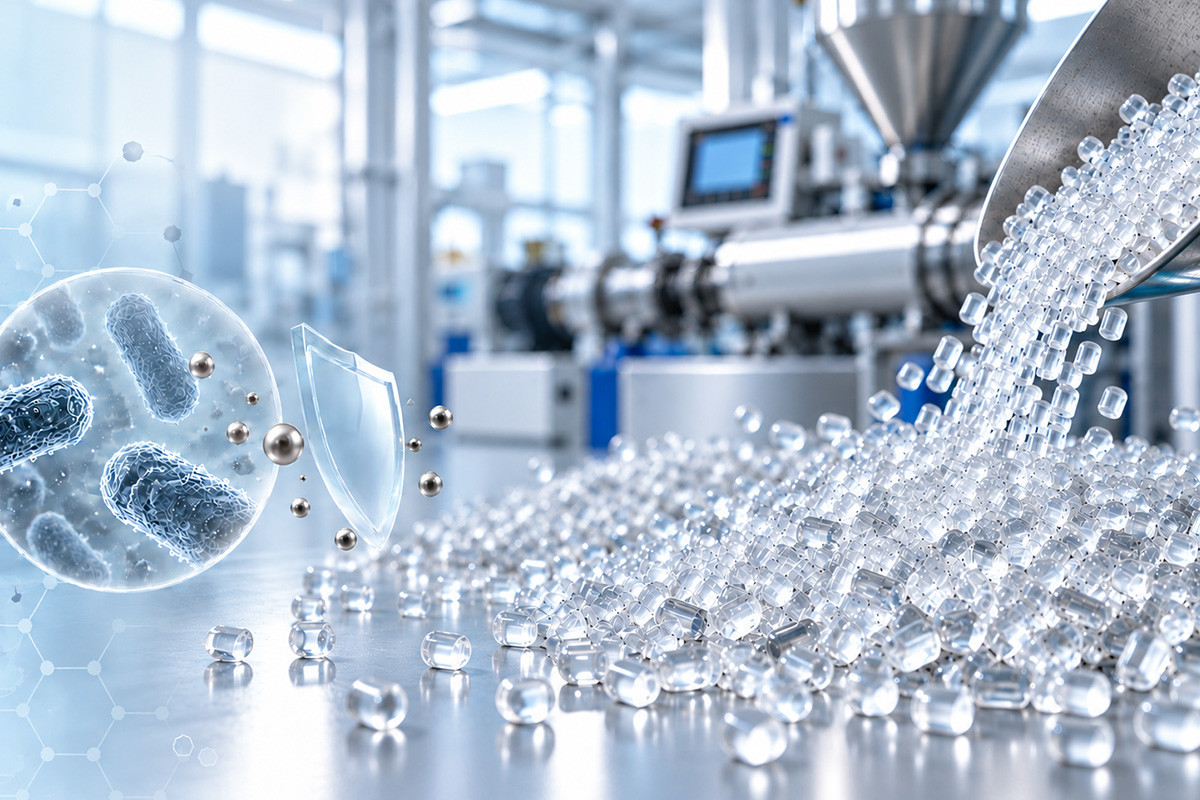
A masterbatch can make additive incorporation part of a familiar polymer-processing route. Choosing one, however, involves more than finding a concentrate with the right function. The carrier, base polymer and manufacturing conditions need to work together in the component the customer actually intends to produce.
The aim is to reach a decision that a product-development team can use: what should be trialled, which requirements must be retained and what evidence would justify the next step? Working through those questions in order makes it easier to discuss the project with Addmaster and to keep the proposed Biomaster function connected to the finished application.
Why the carrier and process belong in the selection decision
A masterbatch introduces an additive through a concentrated formulation. Its suitability therefore needs to be considered in relation to the receiving polymer and the manufacturing route. Polymer family alone is not a complete brief: grade information, colour, other additives and relevant processing conditions help define the trial. A general article cannot establish a universal carrier or addition rate for every material.
Supplier discussions are more productive when they begin with the intended component and its specification. The development team can then assess the proposed incorporation route, identify the information still needed and agree representative samples. The decision is about the complete material and process combination, rather than selecting an additive from a list of broad performance descriptions.
The same principle applies to other functional masterbatch technologies. For example, Addmaster's Scentmaster scented masterbatch technology incorporates fragrance or odour-masking functionality into suitable materials during manufacture, with formulation selection influenced by the intended application and process.
Match the carrier to the manufacturing process
Masterbatch selection involves the carrier as well as the intended additive function. Give the supplier the polymer grade, processing route, temperature profile and finished-part requirements. Ask how the proposed incorporation approach will be evaluated within that process. Do not choose a universal loading level from a general article; the appropriate formulation needs application-specific advice.
Agree how material will be handled and introduced during representative trials. Record mixing conditions and the resulting part quality. Compare treated and untreated samples against the same product specification so that the additive function is considered alongside appearance and manufacturing performance.
Imagine a processor moving from trial plaques to a moulded component. The plaques may answer an early formulation question, while the component introduces its own geometry, surface finish and production conditions. Following the material through that transition helps the team distinguish what the initial trial established from what still needs to be checked on the manufactured part.
That is a development scenario, rather than a reported customer result. Its practical lesson is to keep the sample specification close to the product specification. A short record of the material, formulation, process and surface being evaluated gives everyone a shared starting point for the next discussion.
Learn More About Antimicrobial Masterbatch
Discover how Biomaster antimicrobial masterbatch works, how it is incorporated into polymers and the factors that influence formulation selection.
Explore Antimicrobial Masterbatch Technology
Give the first manufacturing trial a clear purpose
With the application defined, the next task is to decide what the first trial should answer. Trying to establish every product requirement at once can make results difficult to interpret. A more useful starting point is a focused question about incorporation, the intended Biomaster function or a product property that must be retained.
Discuss that question with Addmaster before fixing an incorporation approach or assuming an addition rate. The relevant material and process information will help shape the samples, comparison material where appropriate and records needed to review the outcome. Success criteria should describe what the team needs to learn, rather than simply requesting a sample that “works”.
Preparation matters here. If two samples are intended to support a comparison, record how each was made and which variables differ. A change of formulation, finish or processing route can be relevant to the interpretation. Keeping those details with the samples makes the trial useful even when the result raises another question. It also provides a reference for the production stage, when the team needs to judge how closely the manufactured item follows the development conditions.
Connect antimicrobial testing with the treated material
Biomaster is a silver-ion antimicrobial additive incorporated into suitable materials to inhibit microbial growth on the treated material. The evaluation should address that function on representative samples, using a method appropriate to the surface and the question being investigated.
ISO 22196 may be relevant to suitable plastics and other non-porous surfaces. It should not become the default simply because the project involves antimicrobial technology. A textile or another type of surface may need a different approach, agreed with the relevant technical specialists. The choice of method needs to follow the application.
Read the resulting report alongside the sample specification and test conditions. A laboratory finding describes the samples evaluated under those conditions; it does not establish performance for every grade, formulation or service environment. Nor does treated-material protection replace routine cleaning or demonstrate prevention of human infection or transmission. Keeping those boundaries clear helps the manufacturer develop product wording that reflects the evidence available.
Use the findings to decide what happens next
The value of the trial becomes clear when the team brings the findings back to the original brief. Has the intended Biomaster function been evaluated? Have the relevant product requirements been retained? Which questions remain open before the product can move forward? The answers may support further samples, a formulation adjustment or a representative production trial.
Where a result differs from expectations, start with the sample and process records. Changing several variables at once can make the next result harder to interpret. An agreed adjustment, followed by an appropriate evaluation, gives the development team a clearer way to understand what changed and why it matters.
A promising sample is therefore a useful decision point. Moving towards manufacture means reviewing whether the production material, process and finished surface remain representative of the evidence. Proposed claims and requirements for the intended sales markets belong in that review too. This keeps technical development and product communication moving together, with unresolved questions visible before the next commitment is made.
Developing an Antimicrobial Polymer Product?
Every polymer formulation and manufacturing process presents different requirements. Addmaster can help you assess material compatibility, identify an appropriate Biomaster formulation and plan the next stage of product development.
Discuss Your Application With Addmaster
For a broader overview of how these considerations influence production, explore our guide to choosing antimicrobial masterbatch for polymer processing.
Discuss your masterbatch project with Addmaster
By this stage, the initial question has become a more practical brief. The material, intended product and manufacturing route describe the starting point; the trial question explains what the team needs to learn. Existing samples and test records can then support a discussion about the most useful next step.
If you are still exploring the options, start with Addmaster’s masterbatch guidance. When you are ready to discuss the application, include the relevant grade or formulation information, intended component, sales markets and current development stage. Explain which decision you need help making next. That gives Addmaster a more useful basis for reviewing an appropriate Biomaster approach than a request based on the material name alone.
Frequently asked questions
What matters when selecting an antimicrobial masterbatch?
Start with the base polymer, carrier suitability, processing route and intended component. Agree the incorporation approach and trial plan with Addmaster rather than assuming that one masterbatch or addition rate will suit every polymer process.
When should Addmaster be involved in the development discussion?
Discuss the material, manufacturing process and intended application before fixing the trial formulation. Early discussion helps identify the information, samples and evaluation work needed for the next decision, while leaving application suitability subject to appropriate review.
Planning a masterbatch project? Contact Addmaster with your material, process and application requirements to discuss the next development step.
What Next?
🔗 Follow us on Social Media, here is our LINK TREE
✉️ See how our additive technology can benefit your business by CONTACTING US
🦠 Find out more about Biomaster Antimicrobial Technology HERE
🎥 Watch our video on how Biomaster works WATCH NOW
📰 Subscribe to our Newsletter - SUBSCRIBE
← Back to blog