Designing Antimicrobial Technology into Education Environments
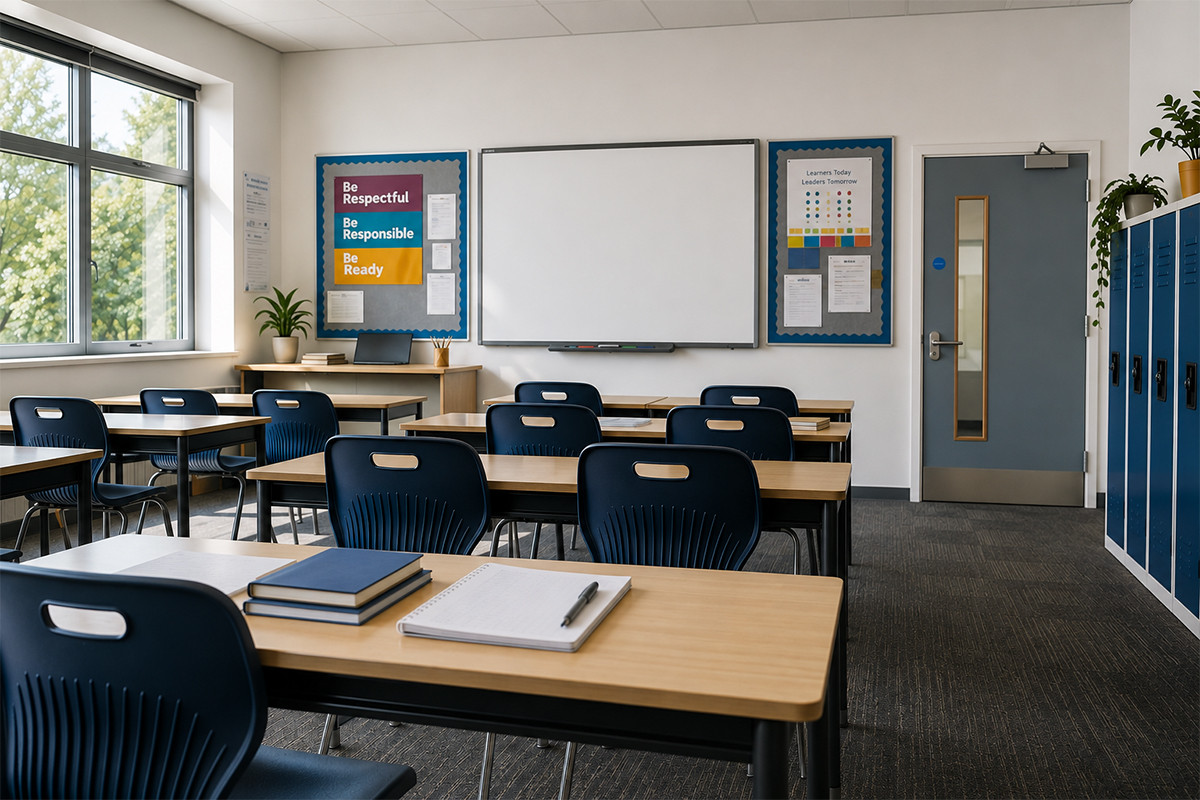
Every September, schools across the UK come back to life. Classrooms fill, corridors become busy again and thousands of desks, chairs, lockers, keyboards, door handles and other everyday products return to constant use. It is a familiar part of the new school year, but it also provides an opportunity to look more closely at the materials and products that make up modern education environments and consider whether they could be designed to do more.
Schools contain an enormous variety of products that must perform in demanding conditions. Classroom furniture needs to withstand years of repeated use, fixtures and fittings are handled throughout the day, IT equipment may be shared between multiple pupils, and washrooms, dining areas and communal spaces contain products that are regularly touched and cleaned. Material selection therefore plays an important role in how these products are designed, manufactured and maintained throughout their working lives.
Increasingly, manufacturers can also consider additional functionality at the material level, incorporating specific properties directly into products during manufacture. Antimicrobial technology is one example, providing manufacturers serving the education sector with an opportunity to add continuous product surface protection to a wide range of suitable products and materials.
Building antimicrobial technology into everyday products
Biomaster antimicrobial technology is designed to help inhibit the growth of microorganisms on treated products and surfaces. Rather than being limited to a temporary surface application, Biomaster can be incorporated into a wide range of materials during manufacture, including plastics, paints, coatings and textiles. This allows antimicrobial functionality to become an integral part of the finished product and to work continuously for the intended lifetime of that treated product.
This approach opens up a broad range of potential applications within education environments. Look around almost any classroom and there are numerous products that could potentially incorporate antimicrobial technology. Plastic chairs and furniture components are obvious examples, while suitable desk and table surfaces may be treated through the materials or coatings used in their construction. Door furniture, light switches, locker components, handrails and waste bins provide further possibilities throughout corridors and communal areas.
The same principle extends into specialist areas of a school. Computer rooms and shared learning spaces contain keyboards, mice and equipment housings that may be suitable for antimicrobial treatment. Washrooms contain dispensers, toilet components, handles and other fixtures, while dining environments can include plastic trays, reusable plastic tableware and other products manufactured from treatable materials. Sports facilities, libraries and other communal areas introduce still more potential applications.
What makes antimicrobial technology particularly interesting from a product-development perspective is that it does not need to be considered as a technology for one particular type of school product. It is fundamentally a material technology, meaning manufacturers can explore how it might be incorporated into different applications according to the material, manufacturing process and intended use of the finished product.
Designing additional functionality from the beginning
Incorporating antimicrobial technology during manufacture allows additional functionality to be considered at the product-development stage rather than added as an afterthought. For manufacturers working with plastics, Biomaster can be supplied in forms suitable for integration into established manufacturing processes. It can also be formulated into suitable paints and coatings, while solutions can be developed for a variety of other material types and applications.
A manufacturer developing a classroom chair, for example, could explore incorporating Biomaster into the plastic used to manufacture the seat or back. A manufacturer of lockers might consider suitable components or treated coatings, while producers of dispensers, waste bins, switches, storage systems and other products used within education environments could take a similar approach. The appropriate solution will always depend on the material, manufacturing process and intended application, which is why technical and regulatory support are important parts of antimicrobial product development.
This is particularly relevant in education because the products found within schools often have long and demanding working lives. A classroom chair may be used by hundreds of pupils over its lifetime, a locker handle may be operated thousands of times, and a keyboard in a shared computer room can be used repeatedly throughout every school day. These products may also be exposed to frequent cleaning, abrasion and general wear, making durability an important consideration when manufacturers introduce additional functionality.
Because Biomaster can be incorporated directly into the material or suitable coating during manufacture, the antimicrobial technology is designed to provide continuous product surface protection for the intended lifetime of the treated product. Rather than relying on functionality that needs to be repeatedly reapplied, antimicrobial properties can therefore form part of the material specification itself.
Complementing established cleaning practices
The role of antimicrobial technology within an education environment also needs to be clearly understood. Biomaster is designed to protect the treated product or surface; it does not replace cleaning and should not be regarded as an alternative to established cleaning practices within schools.
Instead, cleaning and built-in antimicrobial technology perform complementary functions. Regular cleaning physically removes dirt and contamination from surfaces, while Biomaster works continuously on the treated product to help inhibit the growth of microorganisms on that surface between cleaning cycles. This means antimicrobial technology can provide an additional level of product surface protection while established cleaning practices continue as normal.
This distinction is particularly important when communicating antimicrobial technology responsibly. The benefit relates to the treated product and its surface rather than providing a health benefit to the people using it. For manufacturers, this creates an opportunity to develop products with an additional material property while maintaining clear and responsible communication about what the technology is designed to do.
Looking at the whole education environment
Perhaps the most interesting opportunity is to think beyond individual touchpoints and consider the education environment as a collection of different materials and applications. Plastics, textiles, paints, coatings and other materials appear throughout classrooms, corridors, libraries, dining areas, washrooms, sports facilities and communal spaces, creating numerous opportunities for additional material functionality to be considered during product development.
This does not mean that every product or surface within a school needs to incorporate antimicrobial technology. The more useful approach is to identify applications where antimicrobial product protection represents a relevant additional property and where it can be effectively integrated into the manufacturing process. For a manufacturer supplying multiple products into the education sector, this can also mean looking across an entire product portfolio rather than considering antimicrobial technology for a single application in isolation.
The same thinking can apply further upstream. Product designers, material suppliers, architects and specifiers involved in education environments can consider the functionality of materials alongside more familiar requirements such as durability, appearance, cleanability and performance. By considering these properties earlier in the design process, additional functionality can become part of the product specification from the outset.
Asking more from the materials around us
The return to school naturally focuses attention on pupils, teachers and classrooms, but behind every education environment is an enormous collection of materials and products designed to perform day after day, often for many years. From the chair at a classroom desk to the locker in a corridor, the keyboard in an IT suite or the dispenser in a washroom, material choice influences how those products look, feel and perform throughout their working lives.
Material innovation gives manufacturers an opportunity to ask more of those products. Could a plastic chair incorporate additional product surface protection? Could antimicrobial functionality be built into a locker component, waste bin, dispenser or keyboard housing? Could a coating provide functionality beyond colour, appearance and conventional surface performance? These are questions that can increasingly be considered during product development rather than after a product has already been designed.
As another school year begins, it is a timely reminder that innovation does not always require completely reinventing the products around us. Sometimes it starts by reconsidering what the materials from which those products are made are capable of doing.
Discover Biomaster Antimicrobial Technology
Biomaster antimicrobial technology can be incorporated into a wide range of materials and manufacturing processes, helping to inhibit the growth of microorganisms on treated surfaces and providing continuous antimicrobial product protection for the intended lifetime of the treated product.
Addmaster works alongside manufacturers throughout the development process, providing technical, regulatory and marketing support to help customers successfully integrate and communicate Biomaster antimicrobial technology. This support is provided as part of working with Addmaster, helping manufacturers move from an initial idea through material selection, testing, product development and ultimately the communication of the finished antimicrobial product.
If you manufacture products or materials for education environments and would like to explore whether antimicrobial technology could become part of your product specification, talk to the Addmaster team or discover more about Biomaster Antimicrobial Technology.
What Next?
🔗 Follow us on Social Media, here is our LINK TREE
✉️ See how our additive technology can benefit your business by CONTACTING US
🦠 Find out more about Biomaster Antimicrobial Technology HERE
🎥 Watch our video on how Biomaster works WATCH NOW
📰 Subscribe to our Newsletter - SUBSCRIBE
← Back to blog