Understanding Plastic Discolouration in Real-World Environments
Most plastics are designed with physical durability in mind. They are tested for strength, flexibility, chemical resistance, and long-term performance under expected environmental conditions. Yet in real-world environments, materials are exposed to far more than mechanical stress alone.
Across their lifetime, plastic surfaces encounter moisture, heat, repeated handling, airborne contamination, cleaning chemicals, oils, and continuous microbial exposure. Over time, these interactions influence not only how products perform, but also how they look.
One of the most visible outcomes of this process is discolouration.
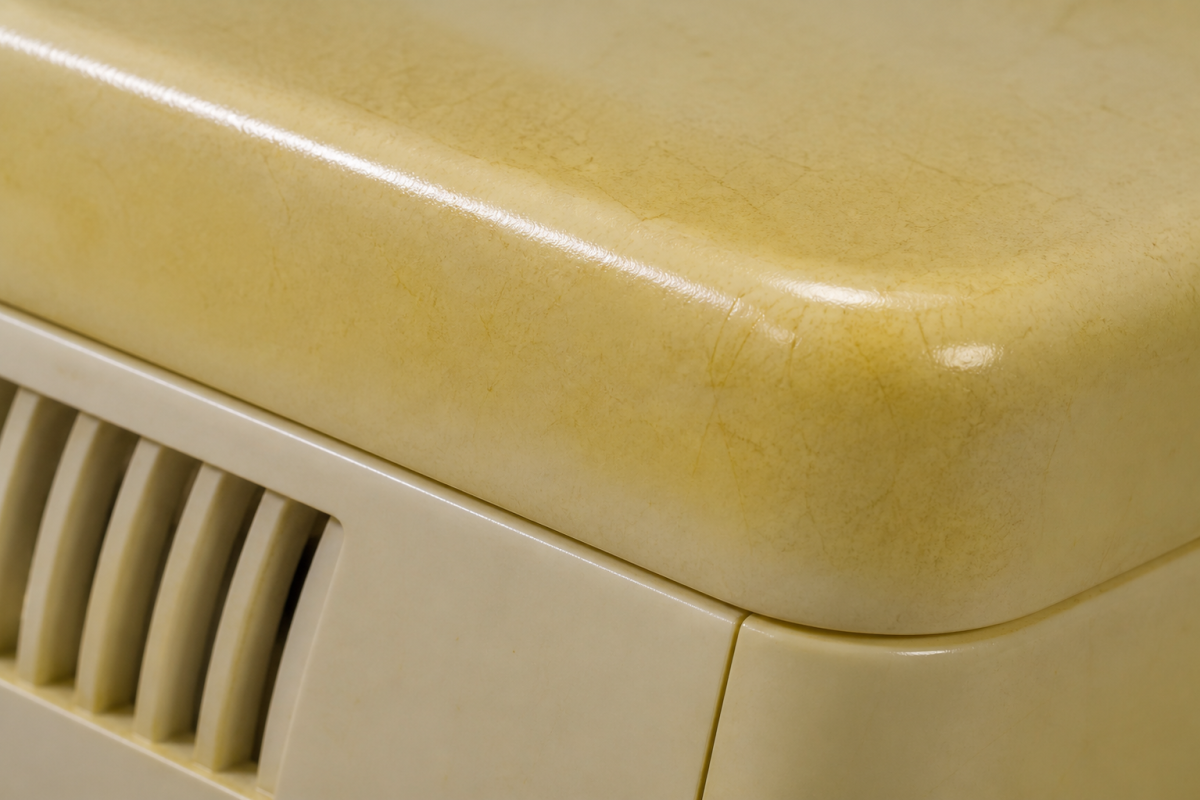
Whether it appears as yellowing, dark spotting, dullness, fading, pink staining, or uneven surface ageing, discolouration is often interpreted as a sign of wear, poor cleanliness, or declining product quality. In many industries, particularly those involving high-touch or moisture-prone environments, visible appearance plays an important role in how products are perceived by end users.
What is often overlooked, however, is that plastic discolouration is rarely caused by a single factor alone.
In many cases, visible surface ageing reflects the combined influence of environmental exposure, chemical interaction, moisture retention, and biological activity acting together over time.
More Than Just UV Exposure
Ultraviolet degradation remains one of the most widely recognised causes of plastic discolouration. Prolonged UV exposure can trigger photooxidation within polymers, causing chemical changes that alter colour and gradually weaken the material structure itself. This is why outdoor plastics frequently become faded, brittle, or yellowed after years of environmental exposure.
However, many plastics develop visible discolouration even in environments where UV exposure is minimal.
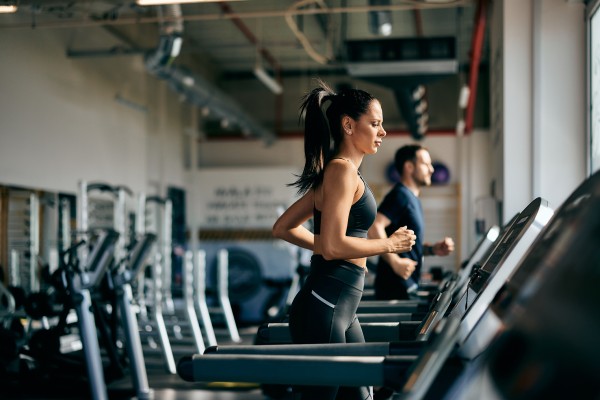
Bathroom fixtures, appliance seals, transport interiors, gym equipment, polymer touchpoints, medical devices, and consumer electronics can all experience staining or uneven ageing despite spending their entire lifespan indoors. This is because the environments products experience on a daily basis are often biologically and chemically active in ways that traditional material testing does not always fully replicate.
Heat, humidity, repeated cleaning, skin oils, airborne pollutants, and organic residues all contribute to surface ageing. At the same time, another less visible factor is continuously interacting with these materials in the background: microorganisms.
The Biological Environment Around Plastic Surfaces
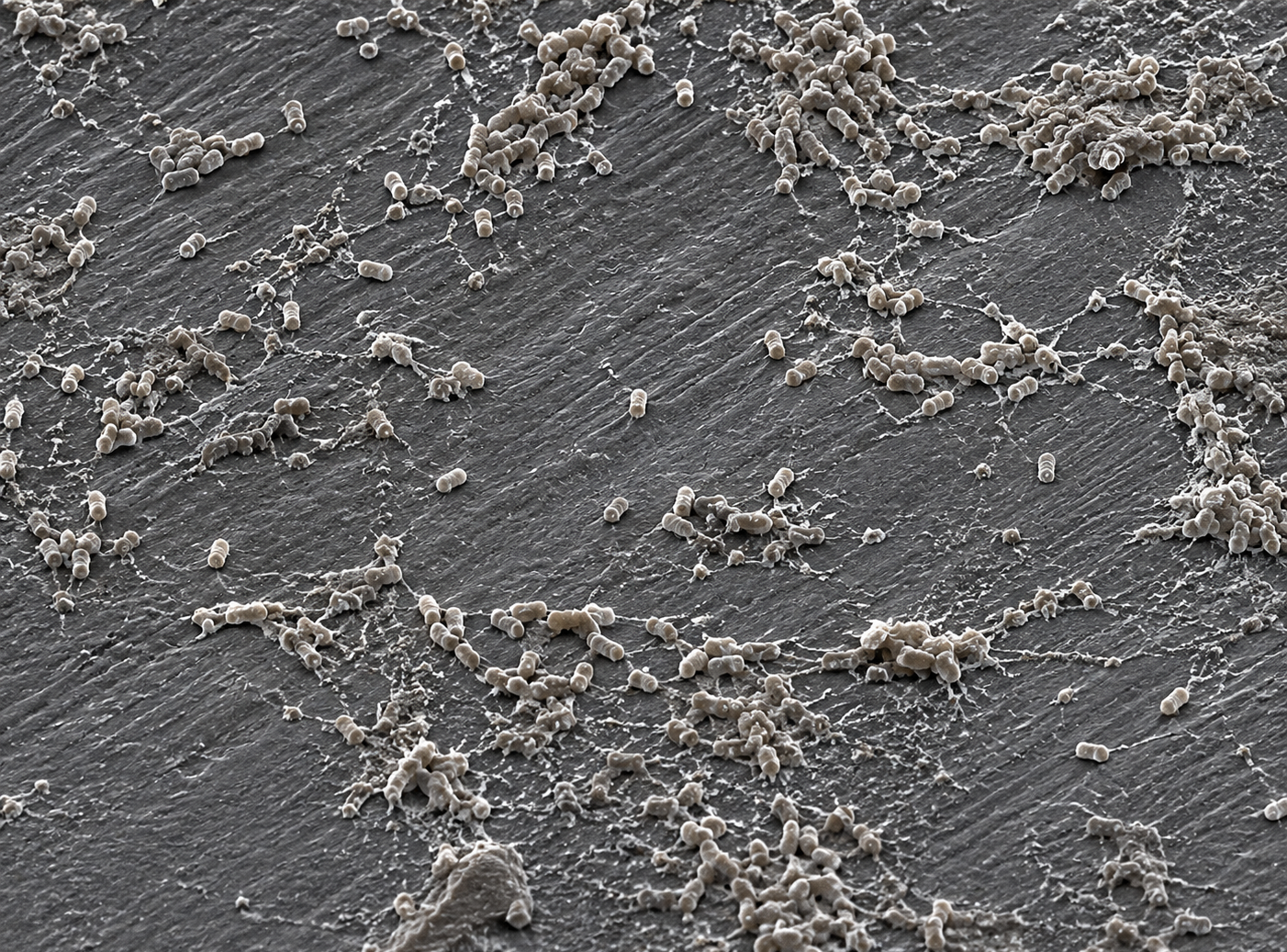
Virtually every plastic surface exists within a microbial environment.
Bacteria and fungi are constantly introduced through air, water, touch, and surrounding contamination. In dry conditions, their presence may remain relatively limited. In environments where moisture, warmth, or organic residue are present, however, microorganisms can begin to establish themselves more effectively on surfaces.
Over time, this can lead to the formation of biofilms, structured microbial communities that adhere to surfaces and create microscopic layers of biological activity.
Biofilms are particularly important because they alter the immediate environment surrounding a material. Rather than existing as isolated microorganisms, these communities trap moisture, minerals, oils, dirt, and organic matter against the surface itself. This creates highly localised conditions that can gradually influence appearance, cleanliness, and visible ageing.
In many cases, the discolouration associated with microbial activity does not come from microorganisms directly “consuming” the plastic. Instead, it results from the interaction between retained contamination, metabolic by-products, pigments, moisture, and prolonged surface exposure over time.
This distinction is important because it highlights how discolouration is often an environmental interaction issue rather than simply a polymer failure.
Why Moisture Changes Surface Behaviour
Moisture is one of the most influential factors in visible plastic ageing.
Water not only supports microbial activity, but also changes how contaminants behave on material surfaces. Damp conditions allow residues to persist for longer periods, encourage microbial retention, and create conditions where staining compounds can accumulate gradually over time.
This is why discolouration frequently develops around seals, textured surfaces, joins, handles, recessed areas, and low-airflow locations where moisture can remain trapped.
Bathrooms provide a particularly visible example of this process. Polymer fixtures and touchpoints are exposed daily to humidity, soap residues, skin oils, condensation, and waterborne microorganisms. Over time, surfaces may begin to develop persistent pink, orange, grey, or dark staining that standard cleaning alone struggles to fully remove.
Similar patterns can also emerge within gyms, healthcare environments, food preparation areas, transportation interiors, and shared-use consumer products where surfaces experience continuous interaction throughout their lifecycle.
In many of these environments, visible ageing occurs gradually rather than suddenly. Surface appearance changes over months or years as environmental exposure accumulates.
Surface Texture and Contamination Retention
The physical characteristics of a plastic surface can also influence how easily discolouration develops.
Microscopic surface texture plays a major role in how moisture and contaminants interact with materials. Rougher or textured surfaces may retain dirt, oils, residues, and microorganisms more easily than smoother finishes, particularly in environments where repeated cleaning or handling occurs.
As surfaces age, small abrasions and wear patterns can further increase contamination retention. This can create a cycle where staining becomes progressively more difficult to remove over time, even when the underlying material remains structurally functional.
For manufacturers, this presents an important challenge. Products are no longer judged solely on mechanical durability. Increasingly, they are also evaluated on how well they maintain their appearance throughout prolonged real-world use.
Appearance, Perception, and Product Lifespan
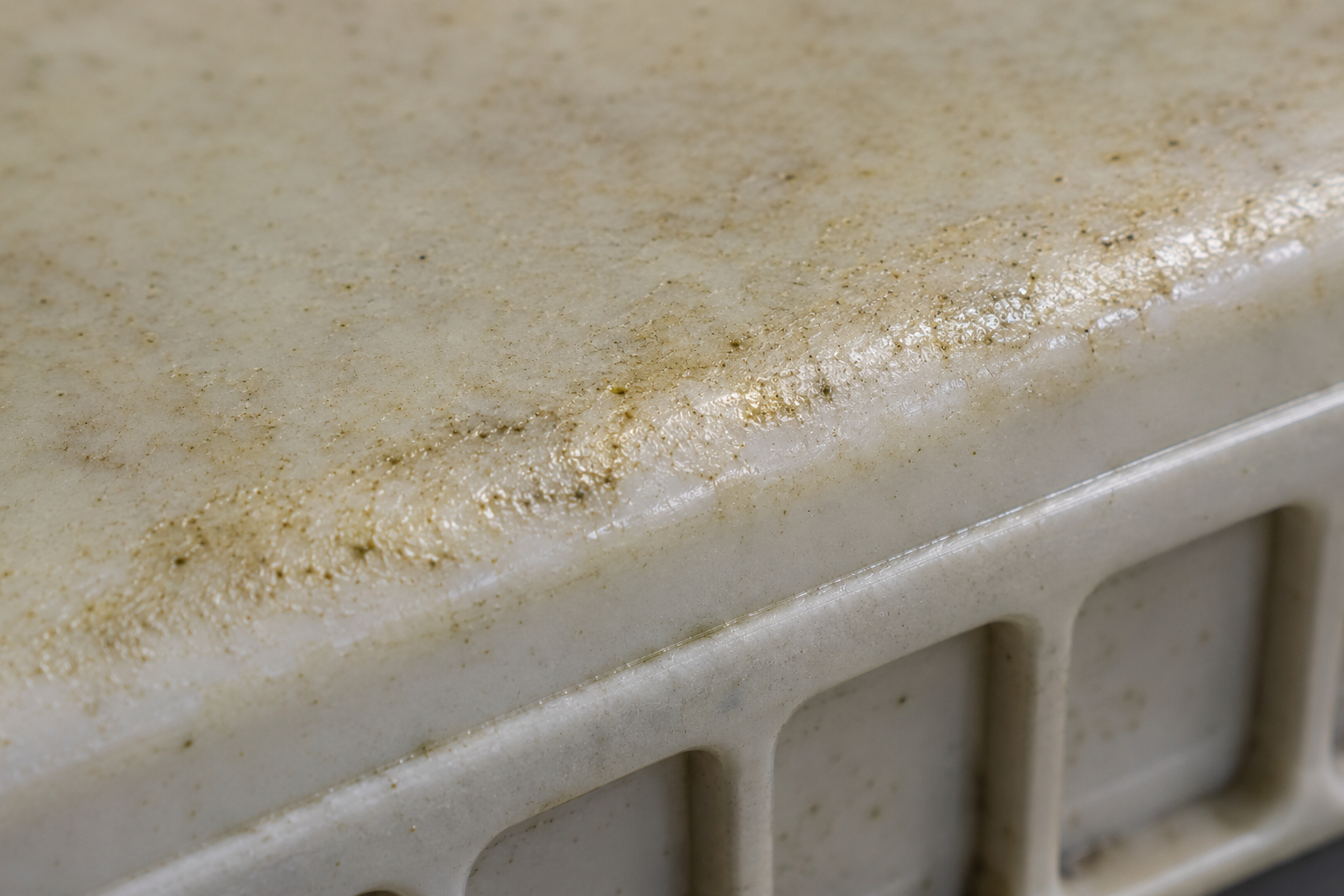
Discolouration is often considered cosmetic, yet appearance strongly influences how products are perceived.
A surface that appears stained, uneven, or visibly aged may be interpreted as unhygienic, poorly maintained, or approaching the end of its usable life, even when the material itself remains technically sound. In commercial environments, this can influence customer confidence, cleaning demands, replacement cycles, and overall brand perception.
This shift is changing how manufacturers think about material performance.
Historically, durability focused heavily on structural integrity. Today, visual ageing and surface condition are becoming increasingly important parts of the wider product lifecycle conversation. Manufacturers are looking not only at how long a product functions, but also how long it continues to look acceptable within its intended environment.
Visible discolouration is often one of the earliest signs that a material is interacting with its environment.
Supporting Cleaner-Looking Surfaces Through Material Technology
As understanding of real-world material exposure continues to evolve, manufacturers are increasingly exploring technologies designed to support longer-lasting surface appearance and product condition.
Antimicrobial additives are now commonly incorporated into plastics as part of broader material protection strategies. Integrated directly into products during manufacturing, these technologies are designed to help inhibit the growth of microorganisms on the surface of the treated article.
By helping reduce microbial growth on the product surface, antimicrobial technologies can assist in reducing some of the biological factors that contribute to staining, odours, and visible surface degradation over time. In moisture-prone or high-touch environments, this can help products maintain a cleaner-looking appearance throughout their usable lifespan.
Importantly, antimicrobial technologies are not intended to replace normal cleaning practices. Instead, they form part of a wider material design approach focused on supporting durability, appearance retention, and long-term product quality in demanding environments.
This represents a broader shift in how manufacturers approach product development. Rather than treating discolouration solely as a maintenance issue, there is increasing recognition that material performance begins during the design and manufacturing stage itself.
Designing Plastics for Real-World Environments
Plastic discolouration is rarely the result of a single isolated cause. In most cases, it reflects the cumulative interaction between environmental exposure, moisture, contamination, handling, chemical stress, and biological activity over time.
As products are increasingly used in demanding, shared, and high-contact environments, understanding these interactions is becoming more important for manufacturers across multiple industries.
The future of material design is not simply about creating plastics that are mechanically durable. It is about developing materials that continue to perform visually and functionally throughout prolonged real-world exposure.
Appearance retention is therefore becoming part of the wider conversation around product longevity, sustainability, maintenance, and user perception. A product that maintains its appearance for longer is often perceived as lasting longer, performing better, and requiring less premature replacement.
Understanding how biological activity influences material ageing is becoming an increasingly important part of that conversation.
CLICK HERE to find out how our Biomaster antimicrobial technology can be used in your plastic products.
Further Reading
Willocks, P. (2026) “Designing for Durability in a Microbial World (A Framework for Understanding Biologically Mediated Material Degradation),” Designing for Durability in a Microbial World (A Framework for Understanding Biologically Mediated Material Degradation).
What Next?
🔗 Follow us on Social Media, here is our LINK TREE
✉️ See how our additive technology can benefit your business by CONTACTING US
🦠 Find out more about Biomaster Antimicrobial Technology HERE
🎥 Watch our video on how Biomaster works WATCH NOW
📰 Subscribe to our Newsletter - SUBSCRIBE
← Back to blog