


Curtiss-Wright Surface Technologies
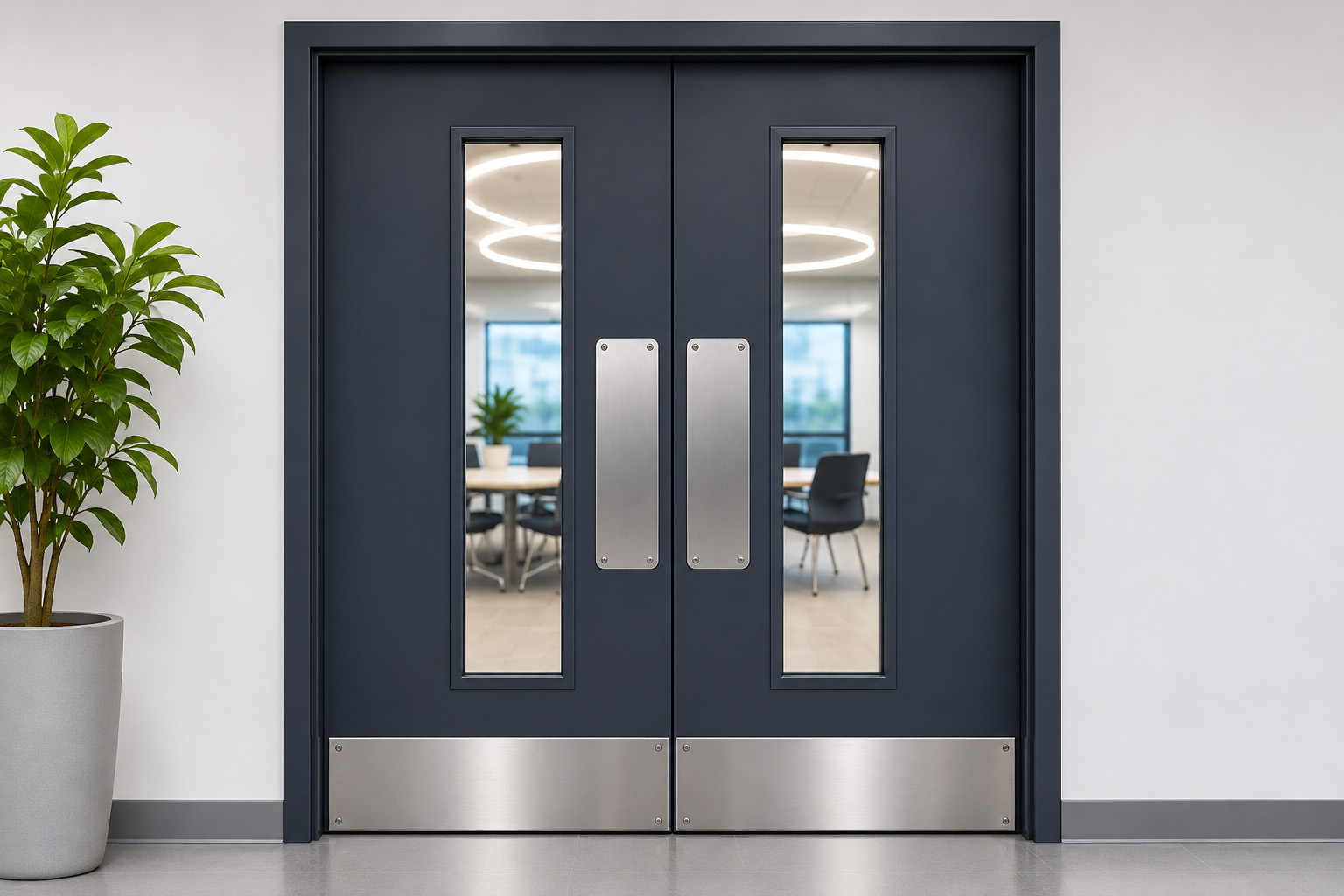
Enhancing Door Furniture with Fluregiene 200™ and Biomaster Antimicrobial Technology
Overview
Door handles, push plates and other architectural door furniture are among the most frequently touched components in any building. Used continuously throughout the day in offices, hospitals, schools, hotels and public facilities, these everyday fittings must combine durability, functionality and appearance with the demands of regular cleaning and maintenance.
Curtiss-Wright Surface Technologies, a global specialist in engineered surface treatments and protective coatings, brings additional functionality to these familiar building components through Fluregiene 200™, its specialist PTFE-based fluoropolymer coating, incorporating Biomaster antimicrobial technology from Addmaster.
Fluregiene 200™ combines the low-friction, non-stick and wear-resistant characteristics of an engineered coating with silver-ion antimicrobial technology. For door handles and other treated door furniture, this brings together practical coating performance and protection against bacterial growth on the coated surface.
The Challenge
Door furniture is designed to withstand constant physical contact. From a lever handle in a busy office to a push plate in a hospital corridor, these components are subjected to repeated handling, cleaning and everyday wear.
For manufacturers and suppliers, selecting the right surface finish involves balancing appearance, durability, ease of maintenance and long-term performance. Increasingly, there is also an opportunity to introduce additional functionality through the application of specialist coatings.
For Curtiss-Wright, the opportunity was to build antimicrobial functionality into Fluregiene 200™ while retaining the key advantages of the coating: low friction, resistance to chemicals and abrasion, and a surface designed to be easier to wipe clean.
Any antimicrobial additive also needs to be compatible with the selected coating formulation and manufacturing process, allowing the technology to be incorporated without compromising the intended finish or functional properties of the product.
The Solution
Curtiss-Wright Surface Technologies uses Biomaster antimicrobial technology within its Fluregiene 200™ coating offering. Fluregiene 200™ is a PTFE-based fluoropolymer coating developed to combine low friction with chemical resistance, abrasion resistance, flexibility and non-stick surface characteristics.
Biomaster is based on silver-ion technology, which inhibits the growth of susceptible bacteria by interfering with essential cellular processes. When incorporated into a suitable coating formulation, the technology becomes part of the finished protective layer, providing antimicrobial functionality directly where it is required.
Biomaster adds a further function to this engineered coating. Its silver-ion technology can be incorporated into compatible coating formulations to inhibit the growth of susceptible bacteria on the treated surface. Biomaster is also adaptable to a wide range of other coating systems, subject to formulation compatibility and validation.
On door handles, push plates, pull handles and related architectural fittings, Fluregiene 200™ provides an engineered surface finish with anti-stick characteristics that can make it easier to wipe clean. With Biomaster incorporated, the treated coating also provides antimicrobial product protection. Neither property removes the need for routine cleaning.
The solution combines a named Curtiss-Wright coating product, Fluregiene 200™, with Addmaster’s antimicrobial technology, creating a more complete performance proposition for frequently handled architectural surfaces.
The Application
Fluregiene 200™ is particularly relevant to door furniture because it can bring several complementary surface properties together in one coating. Its fluoropolymer formulation provides low friction and anti-stick behaviour, while incorporated Biomaster technology inhibits the growth of susceptible bacteria on the treated coating.
Door handles and lever handles are operated repeatedly throughout the day, while push plates and pull handles are frequently used in entrances, corridors, communal areas and other shared spaces. Despite their relatively small size, these components form an essential part of the everyday building environment.
Applied to compatible door handles, lever handles, push plates and pull handles, Fluregiene 200™ offers architectural hardware manufacturers a way to specify both the practical characteristics of a specialist coating and antimicrobial protection for the finished treated surface. Suitable substrates, application conditions and finished-product performance must be assessed for each project.
The technology is relevant to a broad range of commercial and institutional environments, including healthcare facilities, educational buildings, hospitality venues, offices and public buildings.
Importantly, Biomaster is designed to protect the treated coating by inhibiting microbial growth on its surface. It complements established cleaning and maintenance procedures and does not replace regular cleaning or appropriate hygiene practices.
The Benefits
The combination of Fluregiene 200™ and Biomaster offers a clear distinction: the coating contributes low-friction, anti-stick and resistance characteristics, while Biomaster supplies antimicrobial functionality within the treated coating.
For manufacturers of architectural door furniture, the principal benefit is the opportunity to introduce an additional performance characteristic without fundamentally changing the design or operation of the component.
For manufacturers of architectural door furniture, Fluregiene 200™ provides an opportunity to specify a finish designed for easy wiping and demanding everyday use, alongside the added function of inhibiting bacterial growth on the coated surface. The precise performance of a finished component depends on the coating specification, application process and relevant test results.
The adaptability of Biomaster across different coating formulations also creates opportunities beyond individual door furniture components, allowing antimicrobial functionality to be considered across a wider range of suitable coated products.
Through its collaboration with Addmaster, Curtiss-Wright can draw upon technical, formulation, testing and regulatory expertise to support the development and validation of antimicrobial coating applications.
The Result
By incorporating Biomaster antimicrobial technology into Fluregiene 200™, Curtiss-Wright Surface Technologies can present a named engineered coating solution with additional product-protection functionality for frequently handled architectural components.
The collaboration brings together two complementary areas of expertise: Curtiss-Wright's experience in developing and applying specialist surface treatments and Addmaster's knowledge of antimicrobial additive technology.
For manufacturers and specifiers of door handles, push plates and other architectural hardware, Fluregiene 200™ provides a more tangible way to consider coating selection: low friction, anti-stick characteristics, chemical and abrasion resistance, and antimicrobial functionality can all form part of the specification, subject to project requirements and testing.
It also demonstrates the wider potential of incorporating antimicrobial technology into coatings, transforming familiar products through carefully engineered surface functionality.
Door furniture may represent only a small part of a building, but it is used repeatedly every day. By pairing Fluregiene 200™ with Biomaster, Curtiss-Wright demonstrates how a specialist surface coating can bring both established material performance and additional antimicrobial product protection to familiar fittings.
“Our partnership with Curtiss-Wright Surface Technologies demonstrates how Biomaster can bring additional functionality to everyday products through specialist coating applications. Door handles, push plates and other architectural fittings are constantly handled, making them a particularly relevant application for antimicrobial product protection. By combining Curtiss-Wright's expertise in surface treatments with our antimicrobial technology, we can help manufacturers develop coatings that offer an additional level of protection against bacterial growth on the treated surface.” Paul Willocks, Global Marketing Director, Addmaster
“At Curtiss-Wright Surface Technologies, we are continually looking at ways to enhance the performance and functionality of our specialist coatings and surface treatments. Incorporating Biomaster antimicrobial technology allows us to offer additional product protection for frequently touched components such as door handles and push plates. Working with Addmaster gives us access to established antimicrobial expertise and technical support, helping us deliver coating solutions that meet the evolving requirements of our customers.” Ben Hayes, Regional Sales & Marketing Manager, Curtiss-Wright
Could Biomaster Support Your Next Product?
Developing a new component or improving an existing range? Explore how Biomaster can be incorporated during manufacture to provide antimicrobial product protection, with formulation advice, production trial guidance and testing support tailored to your application.
Explore Antimicrobial Technology with Biomaster
For more information about Curtiss-Wright surface technologies, visit the Curtiss-Wright Surface Technologies website.
For more information about incorporating Biomaster into your products, discover Addmaster’s Biomaster technology.