How Antimicrobial Technology Can Be Integrated into Gym Equipment

A practical guide for manufacturers considering built-in antimicrobial product protection for grips, upholstery, housings and other gym equipment components
Gym equipment has to perform in a demanding environment. Products are handled repeatedly, exposed to sweat and moisture, cleaned frequently and expected to retain their appearance and performance over a long service life. For manufacturers, these conditions create a clear materials challenge: how can the product itself be designed to cope more effectively with the environment in which it will be used?
Built-in antimicrobial technology can form part of the answer. When incorporated into a suitable material during manufacture, it helps inhibit the growth of microorganisms on the treated surface. This provides ongoing product protection for the treated component and can give manufacturers an additional, evidence-led point of differentiation.
The opportunity is broader than adding an antimicrobial claim to a finished machine. A successful development programme starts by identifying the right component, understanding who controls its formulation, selecting a compatible technology and validating both antimicrobial performance and the material properties that matter in real use.
What does built-in antimicrobial technology do?
Biomaster antimicrobial technology is designed to be incorporated into materials such as plastics, coatings, textiles and selected elastomeric systems during manufacture. Once correctly integrated, the technology becomes part of the treated material rather than a product that must be reapplied after each use or cleaning cycle.
Its role is to inhibit the growth of microorganisms on the treated surface. Depending on the application and the evidence generated, this may help protect the material from microbial growth associated with unwanted odours, staining or material degradation. The precise benefit and any external claim must be defined for the actual product, substrate, market and test programme.
This distinction matters. Built-in antimicrobial technology complements normal cleaning practices; it does not physically remove sweat, dirt or residues and should not be presented as a substitute for cleaning. It is also product protection. It should not be claimed to protect people, prevent infection, create a sterile surface or make a gym safer.
Why is this relevant to gym product manufacturers?
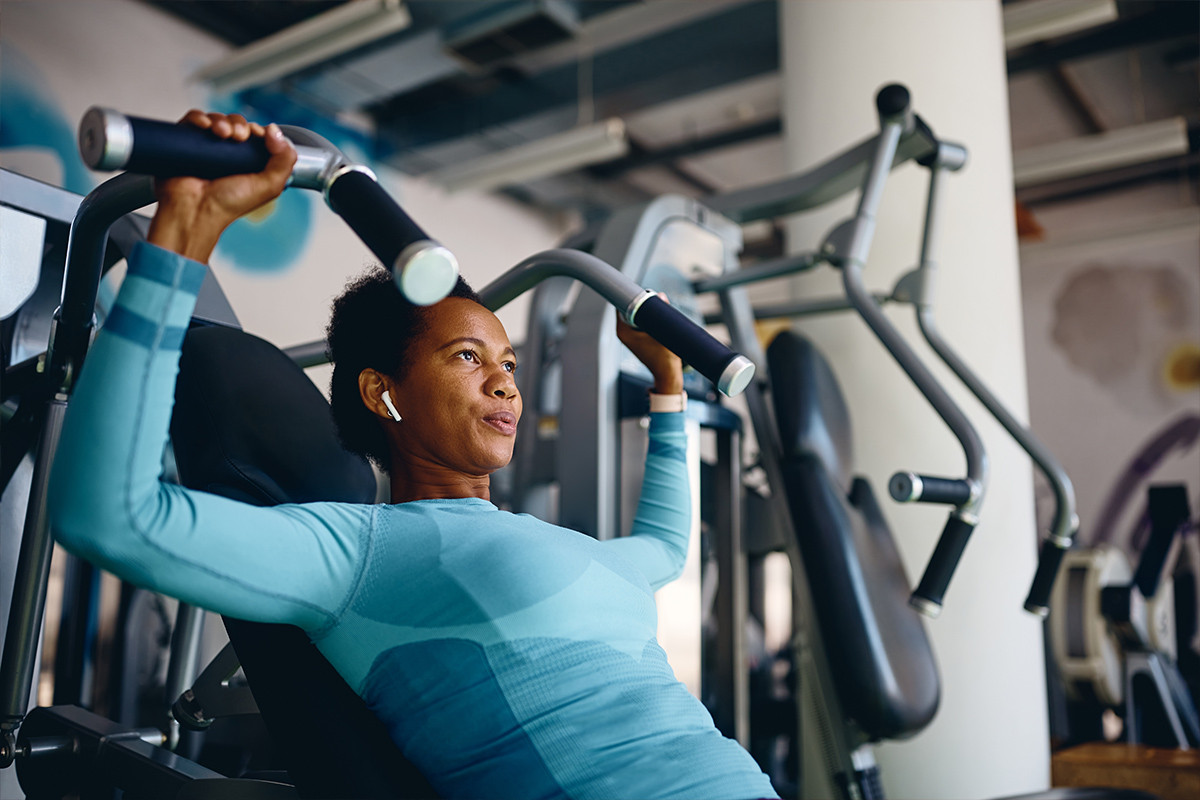
Gym products combine frequent contact with demanding service conditions. A grip may be handled by hundreds of users; an upholstered pad may be exposed to sweat and repeated chemical cleaning; a console housing may be touched continuously while remaining in service for years. The commercial opportunity is therefore not based on suggesting that gym environments are inherently unsafe. It is based on helping the product and its materials perform effectively in the environment for which they are designed.
For an equipment manufacturer, built-in antimicrobial protection may support several development objectives. It can help protect selected materials, strengthen a premium product proposition, answer a customer or tender specification, or create a meaningful difference in a market where many machines offer similar mechanical functions. It can also demonstrate a more considered approach to material selection and product design.
Not every component needs to be treated, and treating more material does not automatically create more value. In many cases, the strongest starting point is a visible, frequently handled or environmentally exposed component that is repeated across a product platform. A single grip, pad or housing may be used across several models and thousands of units, making a contained component-level project commercially significant.
Which gym equipment components could be treated?
The correct application depends on material compatibility, manufacturing control, treatment coverage and the business objective. Potential opportunities can be found across strength equipment, cardio machines, functional training products, studio equipment, storage systems and associated accessories.
| Potential component | Typical material route | Development consideration |
| Grips, handles and adjustment points | Moulded polymers, thermoplastic elastomers, rubber-like compounds or overmoulded systems | Grip, colour, wear resistance, skin-contact expectations and cleaning compatibility |
| Seats, benches and upholstered pads | Coated fabrics, polymer skins, foams and selected textile constructions | Abrasion, flexing, sweat exposure, seam construction and chemical resistance |
| Console housings, buttons and controls | Injection-moulded plastics, coatings or specified surface materials | Appearance, electronics assembly, cleaning exposure and precise treatment coverage |
| Selector pins, knobs and adjustment components | Engineering plastics, elastomeric coverings or coated parts | Mechanical tolerances, repeated handling and supply-chain control |
| Lockers, storage products and gym accessories | Plastic mouldings, coatings, films and compatible material systems | Scale across product ranges, end-use conditions and claim relevance |
These examples are not a universal suitability list. Each component must be reviewed on its own merits. The technology route for a rigid injection-moulded housing will differ from the route for a flexible upholstery construction, coating or textile. The required testing will also vary according to how the component is manufactured and used.
The material and manufacturing route comes first
A brand may own the product design without directly manufacturing the components. The plastic housing may be moulded by one supplier, the upholstery laminated by another and the finished machine assembled by an original design manufacturer. Before samples or costings can be meaningful, the development team needs to establish who controls the material formulation and where the technology can be introduced.
For a moulded plastic part, this may involve a compounder, masterbatch supplier or injection moulder. For upholstery, the relevant party may be the coating formulator, textile mill, laminator or finished cover supplier. For a coated metal component, the formulation and application process may sit with a specialist coatings company rather than the equipment manufacturer.
This supply-chain mapping is not an administrative detail. It determines who can assess processing temperatures, additive compatibility, colour, dosage, regulatory requirements and production trials. Bringing the right technical partners into the conversation early usually reduces uncertainty and prevents development work being carried out on a material that the brand does not actually control.
Built-in additives and surface coatings are different routes
Some applications are best suited to an antimicrobial additive incorporated into the material. Others may be better served by a treated coating or another surface-applied system. The right answer depends on the substrate, manufacturing process, component geometry, wear pattern, required service life, aesthetics and supply-chain capability.
An incorporated solution can be attractive where the material is formulated or moulded specifically for the product and long-term integration is important. A coating may be appropriate where the base component is already fixed, where the surface finish provides another required function or where the manufacturing line is set up for a controlled coating stage. Neither route should be described as automatically superior. The relevant technologies should be compared against the actual design requirements and supporting evidence.
Will antimicrobial technology affect the material?
This is one of the most important questions in any development programme. Gym equipment components are expected to meet requirements that may include colour consistency, impact strength, flexibility, friction, grip, abrasion resistance, chemical resistance, dimensional stability and appearance. Antimicrobial performance cannot be considered in isolation from those functions.
A responsible programme therefore tests the technology in the customer’s actual or representative formulation and manufacturing conditions. Processing temperature, material grade, additive package, pigments, surface texture and cleaning chemistry can all influence the development route. The aim is to establish a formulation that delivers the required antimicrobial performance while maintaining the critical properties of the host material.
The validation plan may include colour and appearance checks, mechanical testing, abrasion or flex testing, exposure to cleaning chemicals, accelerated ageing and antimicrobial efficacy testing. The exact programme should reflect the component’s intended use rather than rely on a generic result from a different material.
How is antimicrobial performance validated?
The test method should follow the claim the manufacturer intends to make. Laboratory testing typically compares a treated sample with an appropriate untreated control under defined conditions. The relevant standard, organisms, contact time and sample preparation depend on the substrate and market. Testing should be agreed before final claims are written, not added retrospectively to support wording that has already been chosen.
Durability also matters. If the product will be cleaned repeatedly, flexed, abraded or exposed to heat and moisture, the development team should consider whether aged or conditioned samples need to be tested. A result from a new, unexposed sample may not answer the customer’s question about performance after realistic use or cleaning.
Laboratory efficacy data should be communicated accurately. It demonstrates performance under the specified test conditions; it should not be translated into an unsupported real-world health outcome. It also should not be extrapolated automatically between different polymers, finishes, organisms or components.
Developing responsible product claims
Antimicrobial wording is not simply a marketing decision. It depends on what is treated, where the product will be sold, which evidence is available and which regulatory framework applies. A machine containing one treated grip should not automatically be described as an entirely antimicrobial machine. Clear component-specific language is often more accurate and more credible.
A useful treatment map identifies every treated component, the material used, the supporting evidence and the wording proposed for packaging, websites, sales materials and technical documentation. This gives regulatory, technical and marketing teams a shared reference and reduces the risk of broad claims being introduced later in the launch process.
From first conversation to production
A gym equipment project does not have to begin with a complete machine redesign. The most efficient route is usually to start with one well-defined component and a clear commercial objective.
| Stage | Key question | Typical output |
| 1. Opportunity review | Which component has a credible product problem or differentiation value? | Defined component, material, volume and desired outcome |
| 2. Supply-chain mapping | Who controls the formulation and manufacturing process? | Named technical partners and agreed development route |
| 3. Feasibility and sampling | Which technology and formulation are suitable? | Representative treated and control samples |
| 4. Validation | What evidence is required for performance and claims? | Compatibility, durability and efficacy results |
| 5. Production and launch | How will the treatment be controlled and communicated? | Production specification, approved claims and launch materials |
This staged approach allows the manufacturer to resolve the most important uncertainties before committing to a wider rollout. If the first component is successful, the same learning may support additional models, product families or material platforms.
Why work with Addmaster?
The additive itself is only one part of a successful project. Manufacturers also need help selecting the application, engaging the material supply chain, reviewing formulations, planning testing, interpreting results and developing claims that can be used responsibly in the intended market.
Addmaster supports customers across those technical, regulatory and marketing stages. That support is included as part of the relationship rather than offered as a separate paid package, and there are no licence fees or hidden support costs. The objective is to help the manufacturer move from an initial opportunity to a commercially credible, validated treated product—not simply to supply an additive.
You can find out more about why Addmaster should be your supplier of choice HERE.
Frequently asked questions
Does antimicrobial gym equipment replace cleaning?
No. Built-in antimicrobial technology complements normal cleaning practices. Cleaning remains necessary to remove sweat, dirt, residues and other contamination from the product.
Does Biomaster protect people using the equipment?
No personal-protection claim should be made. Biomaster is positioned as product protection for the treated material and should not be described as preventing infection or making a gym safer.
Does the whole machine need to be treated?
No. A component-level application can be a technically and commercially sensible starting point. Any claim must make the treatment coverage clear and must not imply that untreated areas are protected.
Can antimicrobial technology be used in both rigid and flexible materials?
Yes. Technologies can be developed for a range of polymers, coatings, textiles and other material systems, but suitability must be established for the exact formulation, process and end use.
How long does development take?
Timescales depend on material access, supplier involvement, sample production, testing requirements and the customer’s development gates. A short feasibility review can establish the likely route before a detailed programme is agreed.
What Next?
🔗 Follow us on Social Media, here is our LINK TREE
✉️ See how our additive technology can benefit your business by CONTACTING US
🦠 Find out more about Biomaster Antimicrobial Technology HERE
🎥 Watch our video on how Biomaster works WATCH NOW
📰 Subscribe to our Newsletter - SUBSCRIBE
← Back to blog