A Look at Microbial Transfer in Gaming Peripherals

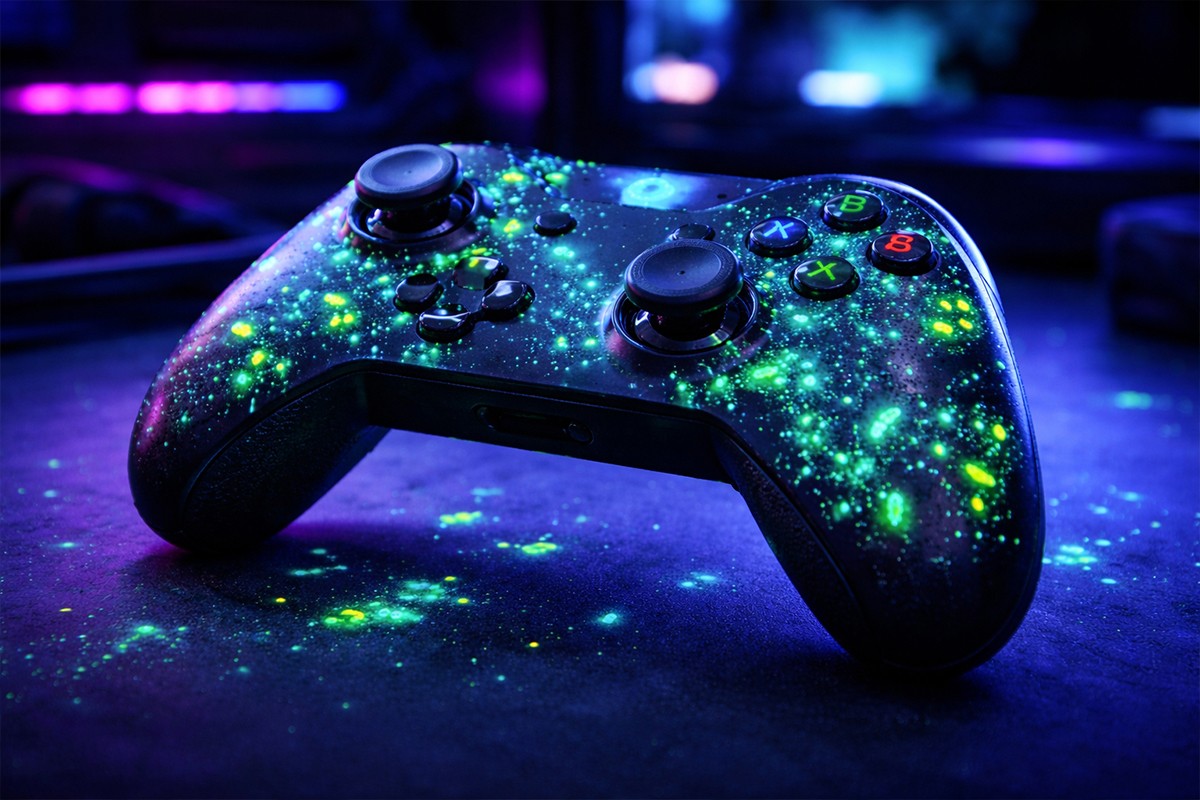
Gaming controllers are among the most frequently handled objects in modern entertainment, often passed between multiple users over the course of a single day.
Despite this constant hand-to-hand contact, gaming controllers and peripherals are rarely discussed from a hygiene or materials science perspective. They are typically designed with performance, durability, and ergonomics in mind, but far less attention is paid to how they behave when exposed to repeated skin contact by multiple users over extended periods of time.
As gaming continues to move beyond private living rooms and into shared public spaces, it raises an important question: what actually transfers onto a shared controller over time, and why does it matter?
From Personal Device to Shared Touchpoint
For much of gaming’s history, controllers were personal items. A controller belonged to a single console and was used by a relatively small group of familiar users. Hygiene was largely a private consideration, addressed through occasional cleaning or simple replacement as products aged.
That assumption no longer reflects how gaming is experienced today. In many environments, a single controller may pass through numerous hands in a short period of time. Each user brings their own skin contact, environmental exposure, and habits, whether that involves eating while playing, sweating during intense sessions, or transporting equipment between locations.
This shift from personal ownership to communal use fundamentally changes how gaming hardware should be evaluated. A controller designed for one user behaves very differently when exposed to repeated, varied contact over time, particularly when cleaning practices are inconsistent or impractical.
Why Gaming Controllers are High-Contact Surfaces
Controllers are in near-constant contact with the hands during use. Grips are held tightly, buttons are pressed repeatedly, and thumbsticks are manipulated continuously, often for hours at a time.
During extended play, hands naturally generate heat and moisture. Sweat, skin oils, and everyday residues gradually transfer onto the surface of the controller. Over time, these substances can accumulate, particularly in areas that are difficult to access or clean thoroughly.
Modern controllers also feature increasingly complex geometries. Textured grips, rubberised components, seams, button housings, and thumbstick bases are all essential for control and comfort, but they also create areas where residues and microorganisms can persist. When controllers are shared, this cycle is repeated continuously, accelerating the rate at which surfaces are exposed to moisture, oils, and microbial transfer.
How Microbial Transfer Occurs in Everyday Use
Microbial transfer is a normal and unavoidable part of daily life. Humans constantly exchange microorganisms with the surfaces they touch. Phones, keyboards, door handles, remote controls, and public touchscreens all carry microbes as a result of regular handling, and gaming controllers behave in the same way.
The process itself is straightforward. When hands touch a surface, microorganisms present on the skin transfer onto that material. When another person touches the same surface, some of those microorganisms transfer again. With repeated contact, this cycle continues.
The speed and extent of transfer increase when contact is frequent, prolonged, or combined with moisture and residues. Surface texture and material type can further influence how microbes persist. Without intervention, microorganisms do not simply disappear; they remain on the surface until removed through cleaning or reduced by environmental factors such as drying or material properties.
What can Accumulate on a Shared Controller
It is important to approach this subject without alarmism. Most microorganisms transferred onto gaming controllers are not harmful. Many are part of the natural skin flora that exists on all humans, while others originate from the surrounding environment.
Controllers may also pick up environmental microbes from desks, bags, clothing, or storage cases. Food and drink residues transferred during snacking can create conditions that allow microorganisms to persist for longer, particularly in warm or enclosed environments. Moisture-tolerant microorganisms are more likely to survive on surfaces that remain warm and damp between uses.
The presence of these microorganisms does not automatically present a health risk. However, when transfer and accumulation occur repeatedly over time, they can contribute to secondary issues such as odour development, surface degradation, and a decline in perceived cleanliness.
The Impact of Cumulative Use
One of the most significant differences between personal and shared gaming hardware is cumulative exposure.
A controller used occasionally by a single individual behaves very differently from one used continuously by many people. In high-traffic environments, controllers may be used back-to-back with little opportunity for surfaces to dry fully. Cleaning, if it happens at all, may be quick and superficial, particularly during busy periods.
Over time, this can lead to persistent residues on high-touch areas, microbial build-up between cleaning cycles, and changes in how the controller looks, smells, or feels. These changes may develop gradually, but they influence both user experience and long-term product performance.
Why Cleaning Alone has Limits
Regular cleaning plays an important role in surface hygiene, but it has practical limitations when applied to gaming hardware.
In real-world settings, cleaning is often inconsistent and dependent on user behaviour. Many controllers and peripherals are not designed to withstand frequent exposure to liquids or aggressive disinfectants. Repeated use of alcohol wipes or harsh cleaning agents can degrade plastics, soften coatings, fade markings, or affect grip performance.
Certain areas of a controller, such as thumbstick bases, button edges, and seams, are also inherently difficult to clean effectively without partial disassembly. As a result, cleaning tends to be reactive and temporary. It reduces surface contamination at a specific moment, but microbial transfer resumes as soon as the controller is used again.
Shifting Toward Preventative Design
As shared gaming environments become more common, manufacturers are increasingly challenged to think beyond cleaning protocols alone.
Preventative design focuses on reducing microbial growth and persistence through material selection and product engineering. This may include surface treatments or technologies that actively inhibit microbial growth within the material itself, helping to reduce accumulation between cleaning cycles rather than relying solely on external cleaning behaviour.
By addressing hygiene at the design stage, manufacturers can support long-term surface freshness and reduce the speed at which microbial build-up occurs in real-world use. Cleaning remains important, but it is supported rather than relied upon as the sole line of defence.
The Role of Materials in Long-Term Performance
Material choice plays a critical role in how gaming accessories perform over time, particularly in shared environments.
Repeated exposure to sweat, skin oils, moisture, and cleaning agents can affect surface integrity, colour stability, tactile feel, and odour retention. When materials are not designed with these factors in mind, controllers may develop persistent smells, show premature wear, or lose the premium feel expected by users.
Conversely, materials engineered for durability and hygiene can maintain their appearance and performance for longer, even under intensive, multi-user conditions. This has implications not only for hygiene, but also for product lifespan, maintenance requirements, and brand perception.
The Role of Antimicrobial Technology in Shared Gaming Hardware
As awareness of shared-device hygiene grows, antimicrobial technology is increasingly being considered as part of a broader materials strategy for gaming controllers and peripherals.
Antimicrobial additives are integrated directly into plastics, polymers, rubbers, and coatings during manufacture. Unlike surface-applied treatments, these technologies are designed to remain active throughout the lifetime of the product, continuously inhibiting the growth of microorganisms on treated surfaces.
In shared gaming environments, antimicrobial materials provide a preventative layer of protection that works alongside regular cleaning. While cleaning removes microorganisms at a specific point in time, antimicrobial technology helps slow down microbial growth between cleaning cycles, particularly on high-touch areas such as grips, buttons, triggers, and thumbsticks.
This approach is especially relevant for gaming hardware that is frequently shared, exposed to prolonged skin contact, difficult to clean thoroughly, or expected to maintain appearance and performance over long periods of use.
Rather than replacing cleaning, antimicrobial technology supports it by reducing the rate at which microbes accumulate, helping gaming peripherals stay fresher for longer in real-world conditions.
Why This Matters for Gaming Brands
From a brand perspective, hygiene increasingly intersects with quality and user experience. As expectations around shared-device cleanliness rise, antimicrobial materials are becoming a practical design consideration rather than a niche feature.
Players may not consciously think about microbial transfer, but they notice when a controller feels sticky, smells unpleasant, or looks worn. In shared environments, visible signs of heavy use can discourage engagement and reflect poorly on the brand behind the product.
By addressing microbial transfer through smarter material choices and integrated antimicrobial product protection, manufacturers can enhance perceived quality, extend product life, reduce complaints related to odour or surface degradation, and differentiate themselves in a crowded accessories market. In professional and public settings, this approach can also support duty-of-care considerations and build user confidence.
Designing for a Shared Future
Gaming continues to expand into new spaces and reach wider audiences. As it does, expectations around cleanliness, comfort, and durability will continue to rise.
Shared controllers and peripherals are no longer an edge case. They are a defining feature of esports, public gaming, education, and experiential retail. Designing gaming hardware for this reality requires a shift in how materials and surfaces are considered.
Designing with microbial transfer in mind is not about restriction or fear. It is about creating products that perform better, last longer, and inspire confidence in a shared world. As gaming continues to bring people together, the materials behind the experience, including antimicrobial technologies designed to support shared use, will play an increasingly important role.
What Next?
🔗 Follow us on Social Media, here is our LINK TREE
✉️ See how our additive technology can benefit your business by CONTACTING US
🦠 Find out more about Biomaster Antimicrobial Technology HERE
🎥 Watch our video on how Biomaster works WATCH NOW
📰 Subscribe to our Newsletter - SUBSCRIBE
← Back to blog